Pannus is an autoimmune eye condition that causes progressive lesions on the cornea and, if left untreated, can eventually lead to blindness.
The good news is that with consistent treatment, most dogs do really well. The earlier it’s caught, the easier it is to manage.
If you’ve noticed something unusual on your dog’s eye, this guide will help you understand what pannus is, which dogs are most at risk, how it’s treated, and what long-term care looks like.
What is pannus in dogs?
Pannus, also known as chronic superficial keratitis (CSK), is an immune-mediated condition that affects the cornea, the clear outer surface at the front of your dog’s eye. In pannus, the immune system mistakenly attacks the cornea, causing inflammation and the gradual development of lesions that can spread, darken, and scar the eye surface.
It typically affects both eyes, though one may look more severely affected than the other, particularly early on. Without treatment, the lesions gradually spread and can cause significant vision loss. With the right treatment, though, most dogs maintain good vision and live comfortably.
There is no cure, but pannus is very manageable. Lifelong treatment keeps the disease under control and protects your dog’s sight.
Another common canine eye problem we treat is cherry eye.
Which dog breeds are most at risk?
German Shepherds are the most commonly affected breed, but pannus can develop in any dog. Border Collies, Greyhounds, and Belgian Shepherds also have a higher predisposition. If you have one of these breeds, it’s worth being familiar with the early signs.
Beyond breed, two environmental factors can significantly worsen pannus: exposure to ultraviolet (UV) light and living at higher altitudes. Dogs that spend a lot of time outdoors in bright conditions may experience faster disease progression.
What does pannus look like?
The early signs of pannus can be easy to miss. Here’s what to watch for:
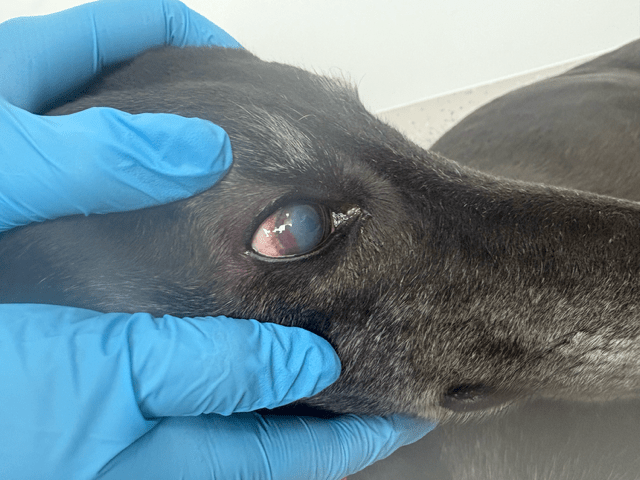
- A small, raised pink, red, or brown “freckle” or lesion at the outer corner of the eye
- The lesion gradually spreading inward over time, sometimes becoming darker or reddish-white in appearance
- Tiny blood vessels visible within the lesion as it grows
- Changes to the third eyelid, including redness, thickening, or pale, depigmented patches – in around 70% of cases
- Reduced vision or changes in confidence and navigation in advanced stages
One thing that often surprises owners: pannus is generally not painful in the early stages. That’s partly why it can go unnoticed until it’s more advanced. Any change in the appearance of your dog’s eye is worth having looked at.

How is pannus diagnosed?
Pannus is usually diagnosed based on your dog’s clinical signs, their history, and a thorough eye examination to rule out other conditions that can look similar.
At Lynbrook Vet, we examine both eyes, even when only one appears affected. Because pannus nearly always involves both corneas to some degree, checking the less-affected eye early gives us a clearer picture and a good baseline for monitoring over time.
In complex or uncertain cases, referral to a veterinary ophthalmologist can provide a specialist assessment and additional diagnostic support.
How is pannus in dogs treated?
There is currently no cure for pannus. But treatment can dramatically improve the eye’s appearance and, more importantly, stop further vision loss in its tracks.
Daily medicated eye drops are the mainstay of treatment. Depending on the severity and your dog’s response, we may prescribe:
- Corticosteroid drops (such as prednisolone) to reduce inflammation
- Immune-modulating drops (such as tacrolimus or cyclosporine) to calm the immune response
- A combination of both for more resistant cases
| Medication type | Examples | What it does |
|---|---|---|
| Corticosteroid drops | Prednisolone | Reduces inflammation |
| Immune-modulating drops | Tacrolimus, ciclosporin | Calms the overactive immune response |
| Combination therapy | Both of the above | Used for more resistant cases |
The most important thing to understand is that treatment for pannus is lifelong. Stopping medication or dosing inconsistently can cause the condition to flare, sometimes quite quickly. The goal is to find the lowest effective dose that keeps the disease stable, and getting there takes a few months of follow-up and adjustment.
In cases that are severe or difficult to control, we may recommend referral to a veterinary ophthalmologist for specialist management.
We’ve found that the dogs who do best are the ones whose owners stay consistent with drops, even on the busy days. When treatment is maintained, the difference in eye appearance and in how comfortable and confident the dog is, can be striking.
How does UV exposure affect pannus?

UV light is one of the main drivers of pannus progression. Reducing your dog’s UV exposure won’t replace medication, but it can meaningfully help keep the condition stable, particularly in sunny climates like Victoria’s.
Some practical steps to reduce UV exposure:
- Check the daily UV index and keep outdoor time shorter during peak UV hours, usually 10am to 2pm
- Make sure your dog has access to shaded areas when they’re outside
- Consider UV-protective dog goggles (such as Doggles). They might look a little funny, but many dogs adapt well to them, and for higher-risk patients, they genuinely help
What does ongoing monitoring look like?
Once treatment starts, we’ll typically schedule a recheck within 2 to 4 weeks to see how the eye is responding. Follow-up appointments are then usually every 1 to 2 months until the condition is well controlled and the lowest effective dose has been confirmed.
Once things are stable, 6-monthly check-ups are generally enough.
One thing to be aware of: relapses can happen, particularly if medication doses are reduced too quickly or treatment is paused. If you notice any changes between appointments (such as the lesion spreading, darkening, or your dog seeming less sure of themselves visually) give us a call and we can bring the appointment forward.
| Stage | Check-up frequency |
|---|---|
| Starting treatment | First recheck at 2–4 weeks |
| Until well controlled | Every 1–2 months |
| Once stable | Every 6 months |
| Any new changes between visits | Call and bring the appointment forward |
When should I book an appointment?

If you’ve noticed any unusual changes to your dog’s eyes, don’t wait to see if it settles. Pannus caught early is much more straightforward to manage, and protecting your dog’s vision now can make a real difference to their quality of life in the long run.
Give us a call or book an appointment online. We’ll take a close look and talk you through the next steps.
Frequently Asked Questions
Can pannus in dogs be cured?
Pannus cannot be cured, but it can be very effectively managed with daily medicated eye drops. With consistent, lifelong treatment, most dogs maintain good vision and live comfortably. The key risk is stopping treatment or missing doses regularly, which can cause the condition to relapse and worsen.
What does pannus look like in a dog?
Pannus typically starts as a small, raised pink, red, or brown lesion at the outer corner of one or both eyes. Over time, it may spread inward, darken, and develop tiny visible blood vessels. In about 70% of cases, there are also changes to the third eyelid, such as redness, thickening, or pale patches.
Is pannus painful for dogs?
In the early and middle stages, pannus is generally not painful. As the condition progresses and scarring develops, some discomfort may occur. The bigger concern is vision loss, which is why early diagnosis and consistent treatment matter so much.
Which dog breeds are most at risk of pannus?
German Shepherds are the most commonly affected breed. Border Collies, Greyhounds, and Belgian Shepherds are also predisposed. Pannus can develop in any breed, and UV exposure is a significant contributing factor regardless of breed.
How often do dogs with pannus need vet check-ups?
In the early stages of treatment, check-ups are typically every 1 to 2 months until the condition is stable. Once well controlled, 6-monthly visits are usually sufficient. If you notice any changes between appointments, call your vet sooner rather than waiting.