Grit in Pad in Greyhounds

Early in my career, a professor at vet school told me, “There are dogs, and there are greyhounds, and greyhounds are not dogs.” After years of working with them here at Lynbrook Vet, I can tell you that is absolutely true.
Grit in the pad is a condition that only greyhounds get. If your grey has started limping on hard surfaces but seems fine on grass, this page is for you.
What is grit in the pad?
Greyhounds have unusually thin pad tissue and less paw fat than other breeds. That combination means foreign material that would simply bounce off another dog’s foot can penetrate a greyhound’s pad.
What happens is this: your greyhound walks over a tiny pebble or a microscopic piece of glass. It embeds in the surface of the pad and, over time, slowly works its way deeper into the pad fat. Once it is in there, it causes constant pain.
The condition is unique to greyhounds. No other breed deals with it in the same way.
Signs your greyhound might have grit in their pad
The most recognisable pattern is a greyhound that is clearly lame on hard or uneven surfaces, but walks relatively normally on soft ground like grass. That contrast exists because hard surfaces press directly on the foreign body embedded in the fat. Grass gives a little, and the pressure eases.
Other signs to look out for:
- Limping or favouring one foot, especially on footpaths
- Reluctance to put full weight on the affected foot
- Tenderness when gentle pressure is applied to the pad
- A small hole, wound, or irregular spot on the pad surface
- The classic greyhound shriek when the pad is squeezed
If you notice any of these signs, do not wait. Grit in the pad does not resolve on its own.
Signs your greyhound might have grit in their pad
First, we start with a physical examination

We start with a physical examination. Applying gentle pressure to the paw pad from both sides quickly tells us whether something is in there. Greyhounds are very clear about letting us know.
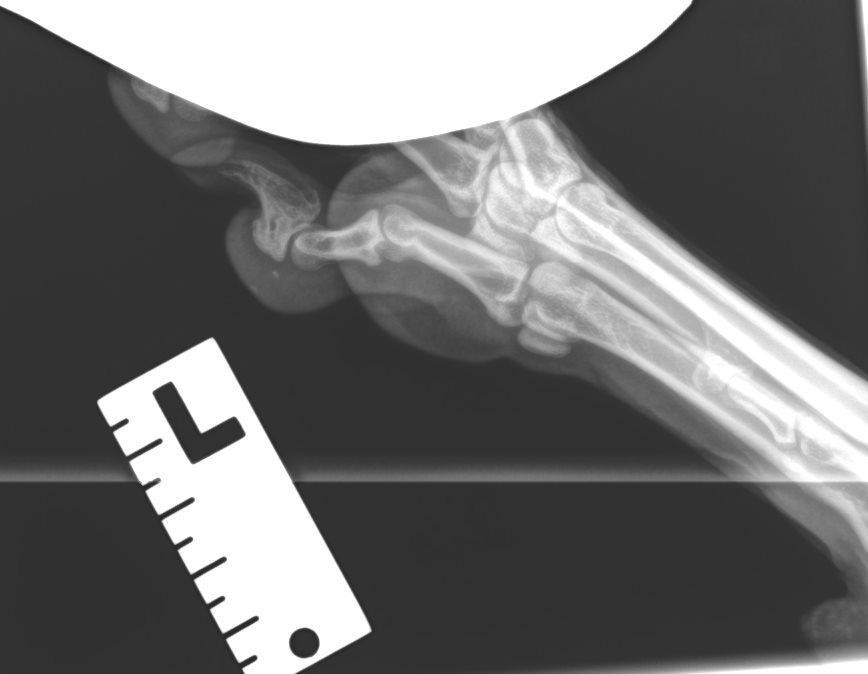
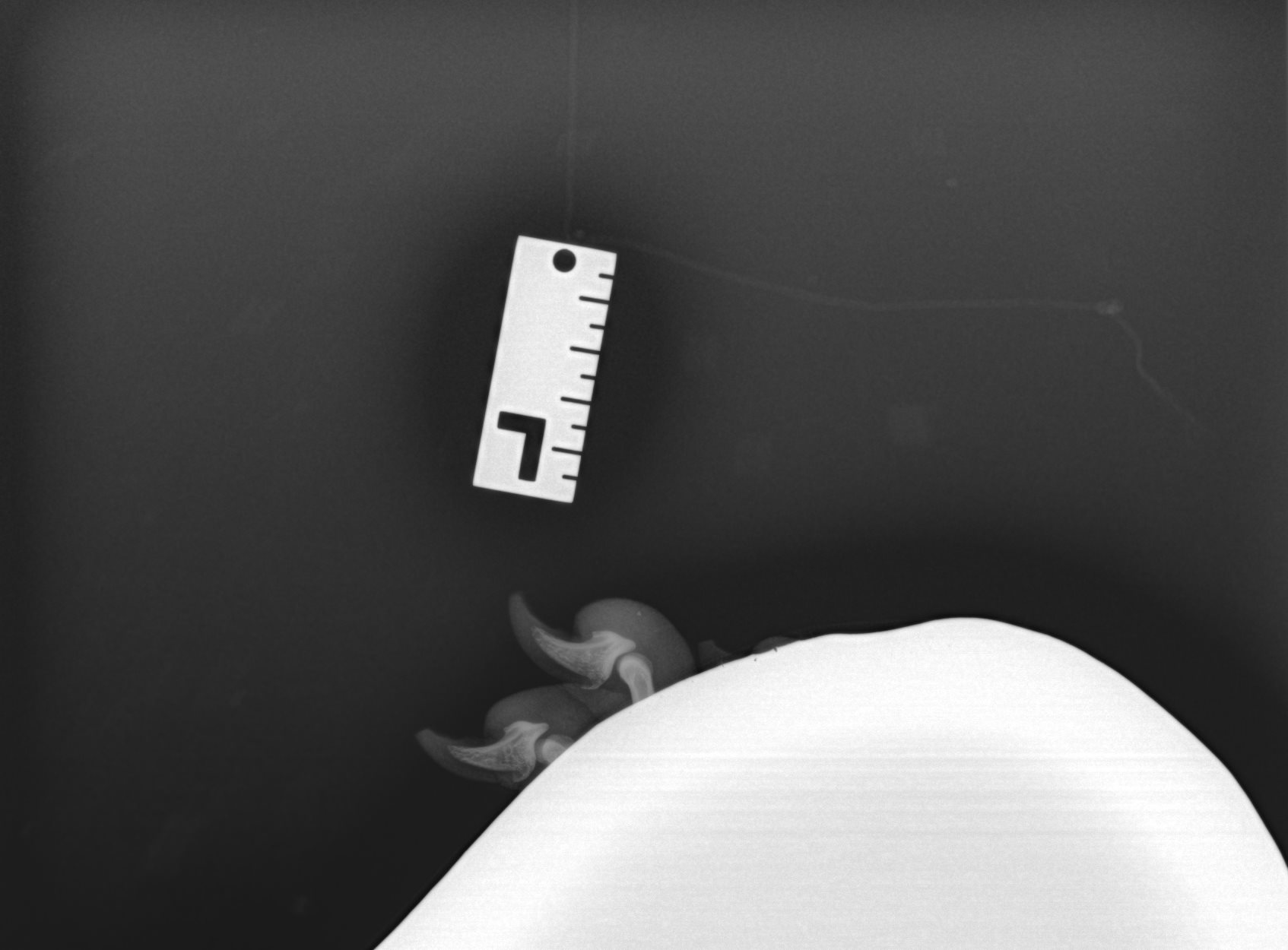
Then, we take X-rays
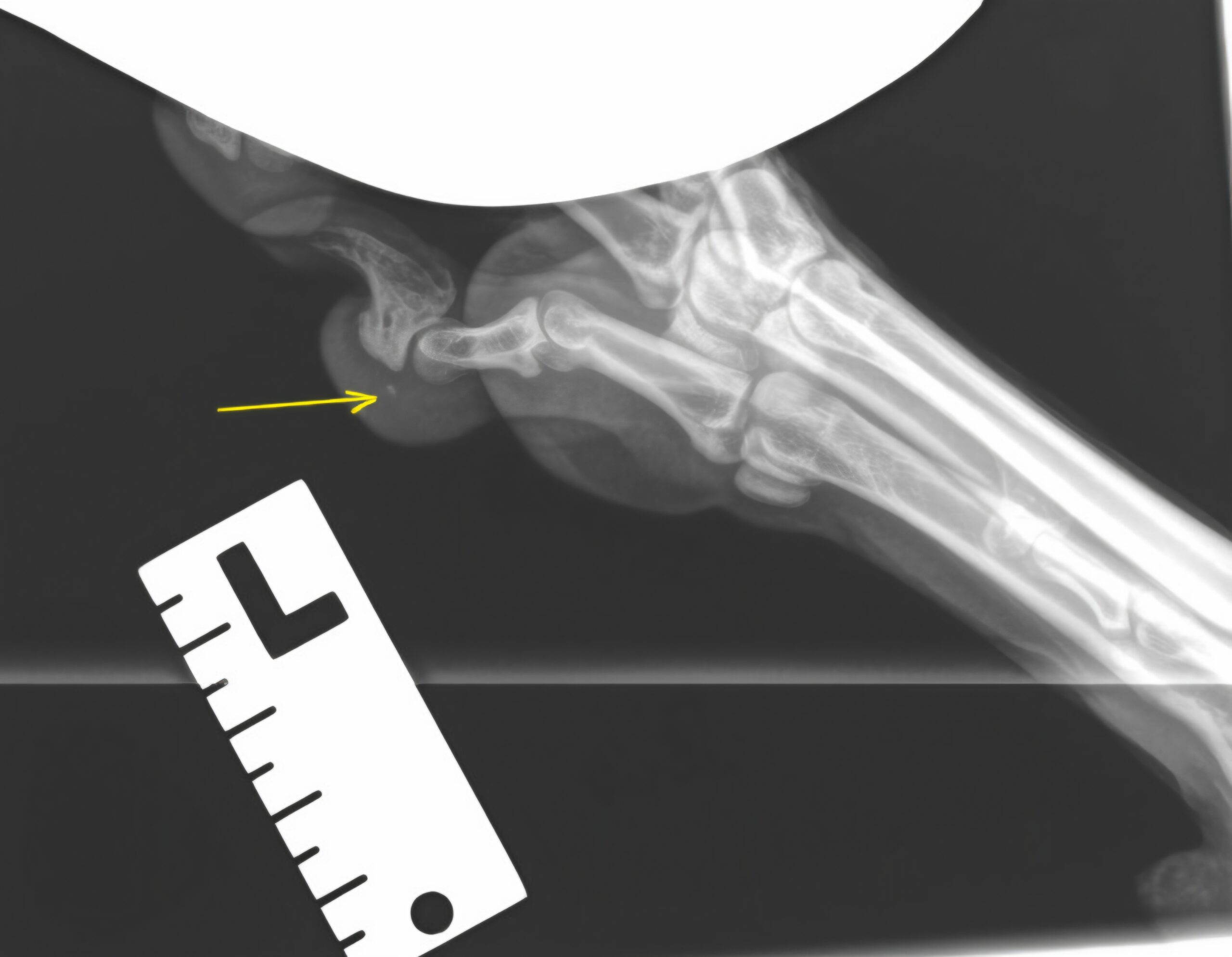
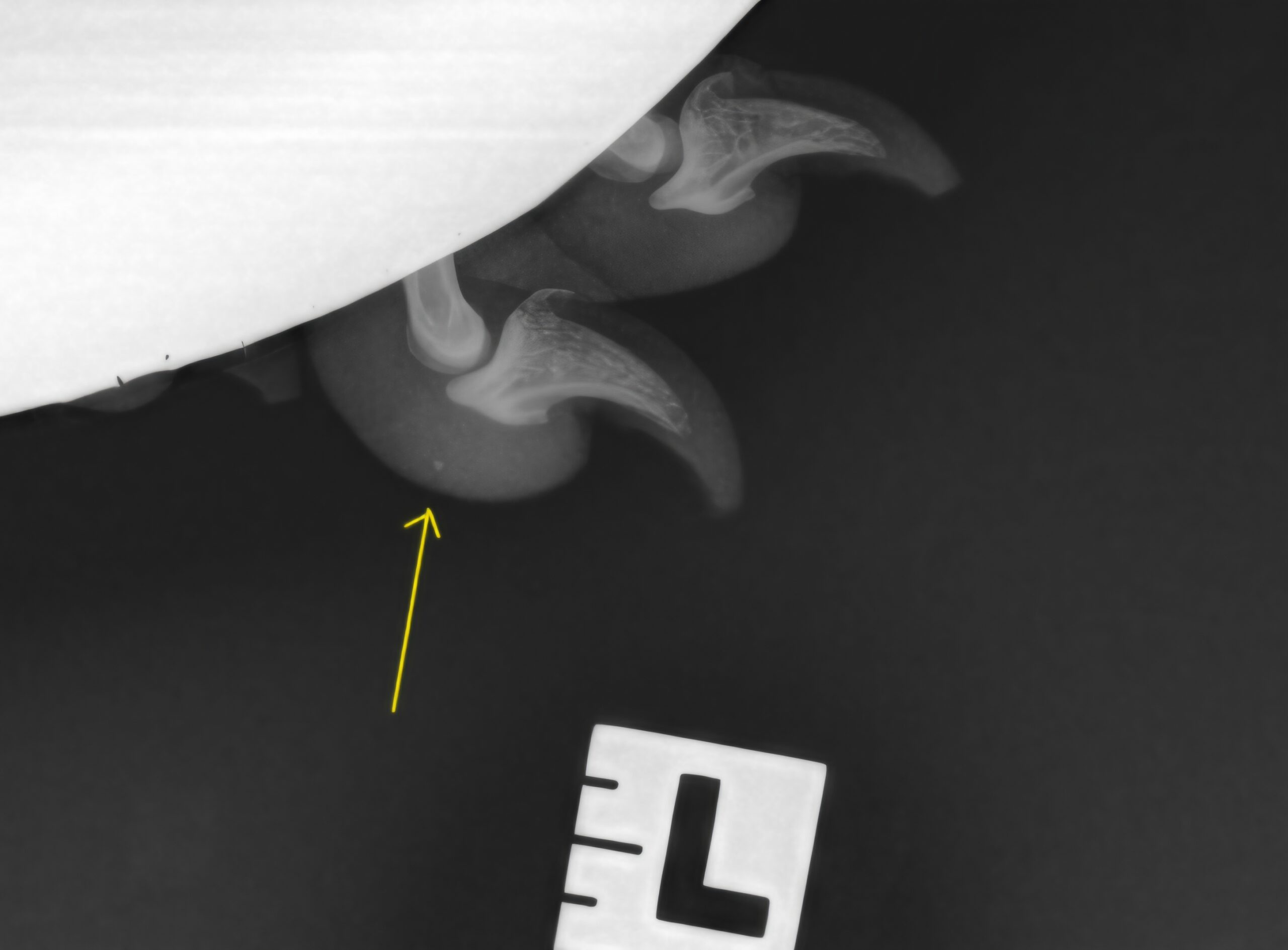
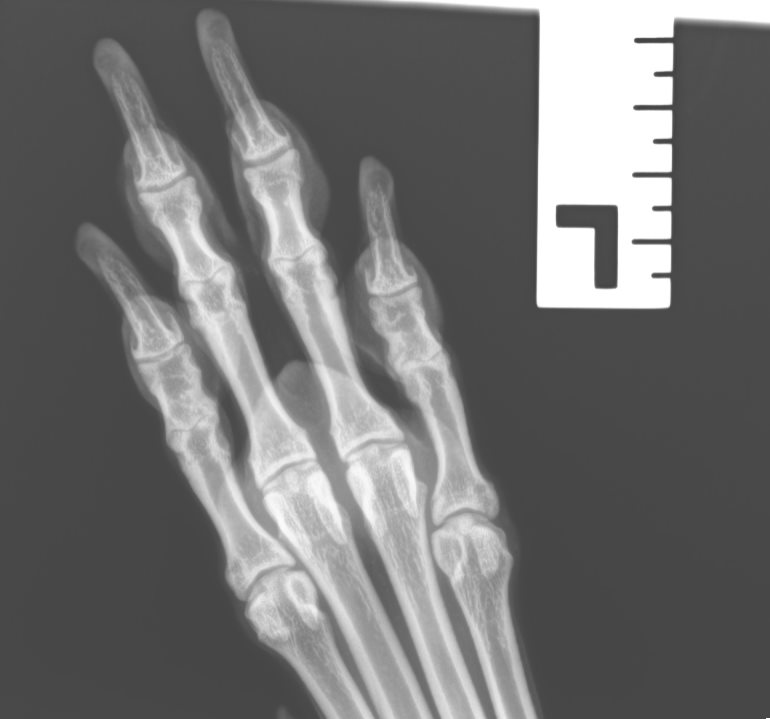
From there, we take X-rays. Two X-rays give us the triangulation we need to locate the foreign body before surgery. That step matters because finding a grain of debris in a greyhound’s pad is genuinely like finding a needle in a haystack. The X-rays are our map.
If the grit has not yet worked its way into the pad fat, extraction from the surface is sometimes possible without surgery. If it has migrated deeper, surgical removal under general anaesthetic is needed.
Because greyhounds have very low body fat and a unique liver metabolism, they process medications differently than other breeds, requiring a tailored anesthetic plan with specific drugs. This customised approach to greyhound anaesthetics, combined with our experience with the breed and close monitoring of their vital parameters using advanced equipment, ensures your hound stays safe and wakes up smoothly and comfortably.
Surgery and final X-rays
Once in surgery, we use the X-ray images as a guide. We work carefully, then take a follow-up X-ray before closing to confirm the grit is fully out. The pad is stitched and bandaged.
The procedure duration can vary from a few minutes to a couple of hours. Finding Grit in a greyhound’s pad is like finding a needle in a haystack. The procedure can be quick if it’s one large piece of grit and the entry hole is evident. It can take hours if there are multiple small pieces of grit and the entry point is not evident. The latter happens when the grit has been in the pad for a long time. Therefore, it is very important for us to address your greyhound’s lameness at the very earliest opportunity to prevent these complications.
A recent case: Slim

Slim is a beautiful 34kg brindle greyhound who came in barely able to put his foot down, even on grass. He limped in on three feet. The moment we applied gentle pressure to his pad, he gave us the iconic greyhound shriek, and we knew exactly where the problem was.
X-rays confirmed grit in the pad. We operated the next day, found two separate pieces, and confirmed via X-ray that both were out before closing. Slim’s pad was stitched and bandaged. He made a full recovery and now wears hot pink booties on his walks.
Watch Slim's full story:
Recovery after grit in pad surgery
How long does bandaging continue and what is the change schedule?
Bandages normally remain on for 3 weeks with bandage changes weekly. So a total of 2 bandage changes, with the first one applied on the day of the surgery. This is contingent on the bandage remaining clean and dry. If it gets wet and dirty, it will need to be changed to avoid an infection.
What activity restrictions apply in the first 1-2 weeks (e.g. lead walks only, no hard surfaces)?
Short 5-10 mins on lead walk morning and night. Can walk around in the house as normal. The less activity, the better.
Is there any home wound care the owner needs to do?
No, we will have the bandage on during recovery, so no home care of the wound is required. Owners just need to look after the bandage. The stitches are removed when the wound is healed, and hence, no home wound care is required.
What warning signs should owners watch for, and when should they call the clinic?
Call the clinic if the greyhound is distressed by the bandage, if there is a foul smell coming from it, or if he/ she is not putting any weight on the leg a few days after the procedure. Owners can call if they have any concerns at all.
When are sutures removed, and does the owner need to bring the dog in for that?
Yes, sutures are removed at 3 weeks at the clinic. We will examine the wound, advise on further care and remove stitches. There is no charge for this visit.
How long before the greyhound is walking normally on any surface?
They start walking normally as soon as the stitches and bandage are removed, so three weeks post-surgery, assuming no complications.
I have done this surgery for 2 of my three greyhounds. The pain from a small piece of grit in the dog’s pad can be surprisingly debilitating. Before the surgery, every step was painful, and you could tell by their expressions that they were in pain and would lag behind on walks and seek out soft surfaces to walk or stand on. After the surgery, I have my happy dog back. They walk normally on all surfaces, they are happier on their walks and are not seeking out soft surfaces. So, overall, they feel great and are able to return to normal activity.
Protecting your greyhound from grit in the future
Do you advise booties on hard surfaces? If so, what type/brand?
Prevention is better than cure; if your grey has had GIP once, it is likely they will again. I am very mindful of where I walk my dogs. I know the areas in my suburb where there is glass on the bitumen. I avoid those areas. I avoid walking such dogs on roads; I seek out footpaths or grass. Grit that can get into a greyhound’s pad is present on all roads. So if you cross the road, get to the other side and lift up each of their feet and dust off any grit that may be sitting on them.
You can also try booties such as Honey Boots, which can protect your grey’s pads on a walk if they will wear them…sometimes booties cause more pain than the Grit.
Any surface awareness guidance for owners?
See above, avoid walking on roads or gravel, seek out footpaths and grassy areas.
How often should owners check the pads?
After every walk, just check the pads and dust them off in case any grit is sticking to them, which will, over time, get pushed in.
Can grit recur in the same greyhound after a successful removal?
Yes, the fact that it occurred once almost guarantees that it can occur again. It may not be in the same pad, but it shows us that the grey is susceptible to it and it can occur again.
Why bring your greyhound to Lynbrook Vet?
Greyhounds need a vet who actually knows them. Different anaesthetic protocols, different blood reference ranges, and a whole set of conditions, including grit in the pad, that do not show up in other breeds.
We see and treat grit in the pad regularly at Lynbrook Vet and Berwick Clyde Vet. We have a genuine soft spot for this breed, and that makes a difference in how we look after them.
Book an appointment
If your greyhound is limping or you think they might have grit in their pad, give us a call or book online. The sooner we find it, the sooner they feel better.
Frequently Asked Questions
Why is my greyhound limping on hard surfaces but fine on grass?
This is one of the clearest signs of grit in the pad. Hard surfaces press directly on the foreign body sitting inside the pad fat, causing pain. Soft ground, like grass, gives slightly and reduces that pressure. If you notice this pattern with your greyhound, come in and let us check their pads.
Does grit in the pad always need surgery?
Not always. If the grit is still at the surface of the pad and has not yet worked its way into the fat, we can sometimes extract it without surgery. Once it has migrated deeper, surgical removal under a greyhound-safe general anaesthetic is the only reliable option.
What anaesthetic is used for greyhounds?
Because greyhounds have very low body fat and a unique liver metabolism, they process medications differently than other breeds. We use lower doses of sedation drugs and a very fast-acting anaesthetic-inducing drug, which washes out of the system quickly. Along with very close monitoring and keeping the procedures under 2 hours, ensures a safe anaesthetic for greyhounds.
How long does recovery take after grit in pad surgery?
Your greyhound will be fully recovered from the anaesthetic within 24 hours. They will walk out of the clinic, but will be a bit sluggish for the first 24 hours. This is because they do not have much body fat where the anaesthetic drugs can be absorbed. The surgery site will take 3 weeks to heal completely. We remove stitches at 3 weeks or sooner, depending on the extent of the surgery and the healing of the wound.
Can I prevent my greyhound from getting grit in the pad?
Yes, avoid bitumen roads and areas with gravel. Dush their pads after every walk, and if they will wear booties, please put these on for walks.
What is the difference between grit in the pad and a corn in greyhounds?
Because greyhounds have very low body fat and thin skin, their paw pads lack the thick, shock-absorbing fatty cushioning found in other breeds. This lack of padding, combined with their unique gait, creates intense, repetitive pressure on specific spots of the pad. In response to this mechanical stress, the body builds up a hard, concentrated lump of hard tissue, which causes pain when pressure is applied. There is no infection or foreign material, which happens when you get grit in the pad. This is foreign material, it causes pain due to inflammation and infection and needs to be removed.
A corn on a greyhound is treated differently; we do cut out corns as they just reform. Instead, we perform the SDFT surgery for corns. Whereas for GIP, we need to go in and remove the grit, which is the inciting problem, we don’t need to do the SDFT procedure here. You can learn more about greyhound corns here in our blog.