Pet Nutrition
There’s no single best food for every dog or cat. The right diet depends on your pet’s age, breed, weight and health, which is why pet nutrition is one of the things we talk about most in the consult room.
Feeding advice is everywhere and most of it contradicts itself. This page is where you can get a straight answer from your own vet: what we recommend, what we stock, and where we land on the arguments you’ve already read about online.
Why does nutrition matter so much?
Food is the biggest daily decision you make for your pet’s health. It shapes their weight, their energy, the condition of their skin and coat, how comfortable their digestion is, and how well their joints hold up as they get older.
Most of the change is gradual, which is exactly why it’s easy to miss. Owners usually notice it in reverse: a dog that starts moving more easily, a cat that stops leaving half the bowl, a coat that comes good after months of looking dull.
Carrying a bit too much weight is the most common nutrition problem we see, and it’s also one of the most fixable. Our pet weight loss programme is built for exactly that.
Our approach to feeding dogs and cats
We’re integrative vets, and the short version of what we believe is that food is medicine. It’s the single most powerful tool you have for your pet’s long term health, and we’d rather talk to you about it early than treat the consequences of it years later.
In practice that means species-appropriate feeding. Dogs and cats evolved on a diet high in protein and fat with very little carbohydrates, and their physiology still reflects that. Standard extruded kibble is close to the opposite, because carbohydrate is what holds a dry biscuit together. A diet built the wrong way round doesn’t cause problems on day one. It causes them later.
So we recommend raw or gently cooked diets, and we’d encourage you to keep ultra processed food to a minimum wherever you can.
The diets we recommend in our clinic
The diets we recommend line up with how dogs and cats are actually built: gently cooked or raw, highly digestible, high in protein and fat and low in carbohydrate.
Having said that, we work with the pet in front of us and the budget in front of us. Sometimes the answer is a mix of diets rather than a wholesale change, and sometimes a prescription diet is the right call for a particular condition. For an otherwise well dog we recommend Lyka, and for cats we recommend Tyga.
If raw is the direction you want to go, there are several good Australian brands worth looking at: Raw and Fresh, Big Dog, Proudi, Organic Paws and The Saltiest Dog.
Lyka and Tyga
Lyka is the fresh food diet we recommend in clinic, and Tyga is its feline version from the same company. Everything below applies to both.
It’s gently cooked, human grade and made here in Australia to high safety standards, then delivered to your door already portioned for your dog. It’s formulated by board certified veterinary nutritionists around the nutrient profile dogs and cats evolved on, which is the part that gives us confidence putting our name to it. Because the quality is consistent, one food covers every life stage. You change the quantity and the protein, not the product.
Dogs we see on Lyka are lean, have good skin, produce well formed stools and enjoy their food. Dr Kunal feeds it to his own three greyhounds, so it isn’t a diet we recommend without having lived with it ourselves.
Lyka’s support team is easy to deal with, and because we know them well we can get on a call and sort out any problem quickly rather than leaving you to chase it.
To be upfront with you: the clinic does receive a benefit from Lyka, in the form of staff discounts and some rebates. We recommend it because we rate it, and we’d rather you knew both things.
Sign up through our clinic referral link and you’ll get a free sample flavour, 50% off your first week, 30% off your second week and a few treats thrown in. Ask at reception if you’d rather we set it up with you.
Prescription and veterinary diets
A prescription diet is food formulated to help manage a specific medical condition. Think of it less as food and more as part of the treatment: the diet is doing a job, and the wrong one can set your pet back. That’s why it comes through the clinic rather than off a supermarket shelf, and why one should never be started without a vet recommending it.
We use these diets most often for skin problems and food allergies, urinary problems in cats, kidney disease, ongoing stomach and digestive upsets, diabetes, pancreatitis and joint disease. Having said this Lyka and similar diets are also suitable for some of these conditions so always speak to us before swapping to prescription diets.
One thing worth knowing is that a lot of what these diets manage, including obesity, dietary sensitivities and skin allergies, can be the result of poor nutrition in the first place. We often find that when a pet moves onto a genuinely good diet, whether that’s Lyka or a well made raw food, those problems become a great deal easier to manage. Where something more specific is needed, we stock and can recommend prescription diets.
Your pet needs an examination first so we can be sure the diet’s the right one and rule out anything else going on. After that we can supply the food and check how they’re responding. Most of these diets take a few weeks to show a difference, so it’s worth sticking with one rather than chopping and changing.
Does my pet need supplements?
Most pets eating a complete and balanced diet don’t need them. The food is already doing the job, and stacking extras on top can do more harm than good. We won’t start a supplement without talking it through with you first.
There are exceptions. Omega 3, usually as fish oil, is the one we’re asked about most and the one with the most behind it, particularly for dogs with itchy skin or sore joints. Joint supplements and probiotics both have their place too, but the quality and the dose vary enormously between products, so it’s worth asking us before you buy.
Now for the questions we get asked about most.
Raw feeding, bones and treats
Raw feeding sits squarely inside what we recommend. We put it alongside gently cooked food, or just behind it, and we’re happy to encourage it.
What we’d ask is that you do it properly. Mince from the supermarket with a few vegetables stirred through isn’t responsible raw feeding, and a diet like that is badly short on vitamins, minerals and essential nutrients in ways that show up as disease further down the track. Source it from a reputable manufacturer, make sure it’s complete and balanced, and make sure it suits your pet’s life stage. Please ask us if you are unsure.
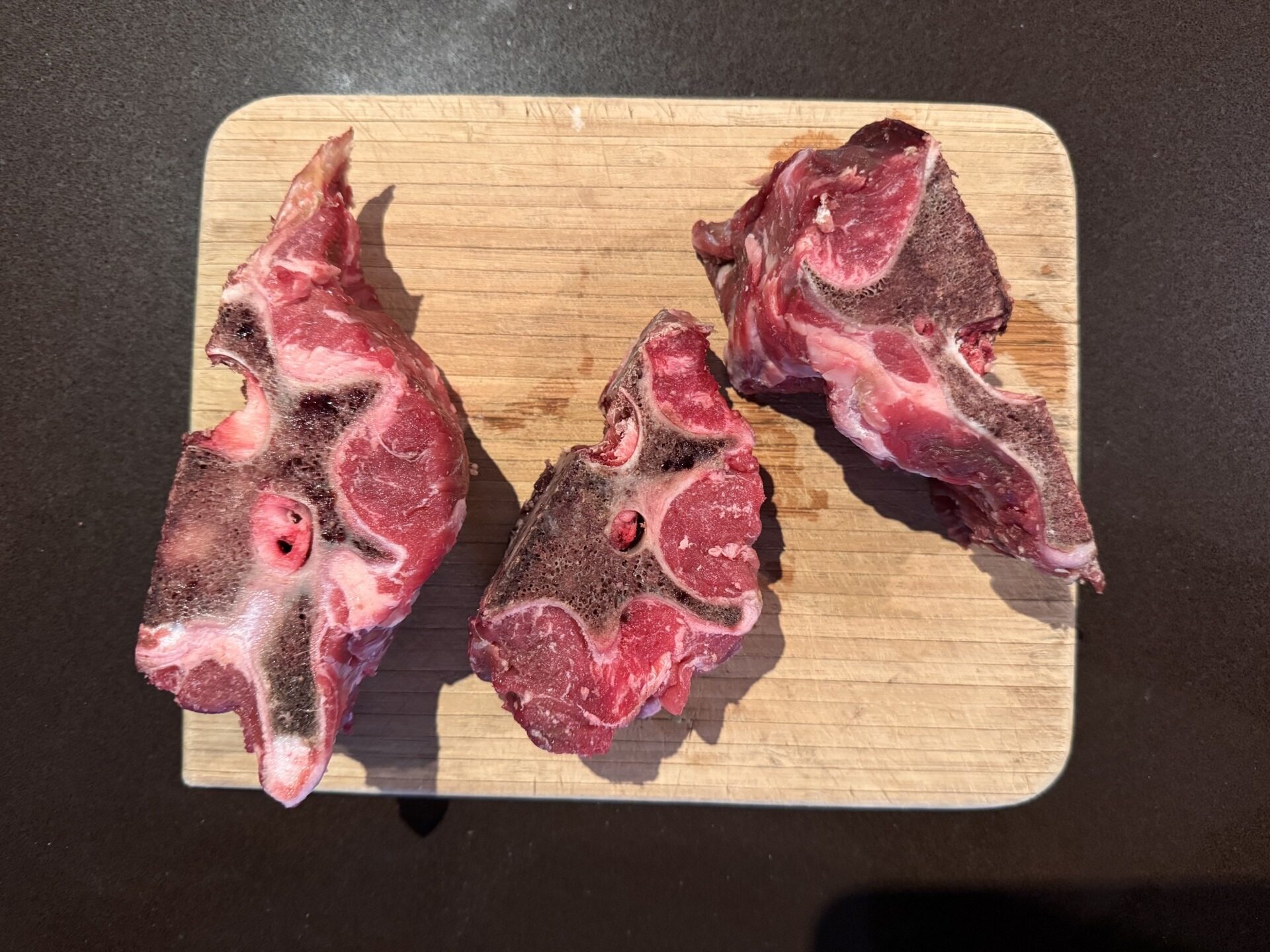
On bones, we think there’s a real place for them. They’re a good source of calcium and phosphorus, they’re what dogs and cats would have eaten in the wild, and the chewing and gnawing itself releases endorphins and dopamine, so pets genuinely enjoy them. Next to daily tooth brushing, bones are the most practical thing you can do about periodontal disease.
They aren’t without risk. Pets can get possessive over them, and bones can cause vomiting, diarrhoea, constipation, fractured teeth and, at worst, an obstruction in the stomach or intestines that needs surgery. Dr Kunal puts the rate of problems at under 10% across the pets he’s seen, so it’s uncommon, but an obstruction is serious when it does happen. Our guide to feeding bones covers which bones we recommend, which ones to avoid and how to feed them safely.
Treats count as food. As a rough guide, keep them to about a tenth of what your pet eats in a day and take the rest out of their meals, otherwise the weight creeps on without anyone noticing. Dental chews are a good option because they earn their keep.
How much should you feed your dog or cat?
Start with the feeding guide that comes with the food, then adjust to your pet’s body condition rather than the number on the label. Those guides are averages, and every pet burns energy differently. If you’re on a portioned diet like Lyka, that work is already done for you.
Needs change as your pet grows. Puppies and kittens need food built for growth, and large breed puppies in particular need a diet formulated for them. On a conventional diet most pets move onto adult food somewhere around their first birthday, and onto a senior diet later on as their appetite, weight and joints change.
Cats aren’t small dogs. They need more protein than dogs do, and they get much of their water from their food, which is one reason cats on dry food alone can end up quietly a little dehydrated which can have further impacts on their Kidneys.
Is your pet at a healthy weight?
Have a go right now. Run your hands along your pet’s sides: you should be able to feel their ribs easily without pressing hard, and see a waist when you look down from above. If you can’t do either, your pet’s probably carrying more than they should be.
Roughly one in three dogs and cats is carrying too much weight, and Dr Kunal would put the real number higher than that based on what comes through the consult room.
There are a few reasons for it and most come back to what’s in the bowl. Kibble is high in carbohydrate, which drives insulin spikes and pushes the body towards storing fat rather than burning it. It’s low in water and protein, and those are the two things that make a pet feel full, so they eat more. It doesn’t spoil, so it gets left out all day and grazed on. And it’s sprayed with fat and palatability enhancers that make it hard to stop eating, which overrides the signals telling a pet they’ve had enough.
Boredom and not enough exercise play their part too. But if we had to pick one thing, it would be the food. We often see weight come off when a pet moves onto a gently cooked diet, without changing anything else.
Book a weigh in and we’ll check properly and work out a plan from there.
Pets with specific needs
Greyhounds have their own requirements and we see a lot of them, so we’ve written a separate guide on feeding them well.
Pets with food sensitivities usually turn up with itchy skin, sore ears or an unsettled stomach rather than anything dramatic. Working out the cause takes a proper diet trial, not guesswork, and we can take you through it.
Fussy eaters are worth a conversation too. Sometimes it’s the food, sometimes it’s habit, and occasionally it’s a sign that something else is going on.
Nutrition advice from our vets
Our vets write regularly on feeding, diets and the questions owners ask us most. The latest articles are below.

Talk to us about your pet's food
Not sure what to feed your pet? Bring the question to your next visit, and bring the bag or the tin along with it. We’re happy to look at what you’re using and tell you honestly whether it’s doing the job.
We look after pets from Lynbrook, Lyndhurst, Hampton Park, Hallam, Cranbourne and the surrounding suburbs. Book online or give us a call.
Did you know most owners only change their pet’s food once something has gone wrong? It’s worth a conversation well before that. Here are the questions we get asked most.
Frequently asked questions
In general yes, when you compare it with what else is available. Here's how we rank the options, best first. Our article goes into why.
- Gently cooked food, such as Lyka
- Raw food, such as Raw and Fresh
- Freeze dried and air dried, such as Prime 100, Ziwi Peak and Frontier Pets
- Good quality canned or wet food, such as Prime 100
- Cold pressed kibble, such as Eureka Pet Co and Ziwi Peak
- Standard extruded kibble, which is most of what's on the shelf
Yes, in general, because it lines up with the high protein, high fat, low carbohydrate profile dogs evolved on. The raw food does need to be free from contamination, complete and balanced, and right for your dog's life stage. Pet mince from the supermarket with vegetables added is not balanced and isn't good for your dog or cat.
Yes, and we think they're excellent for dogs and cats. Bones promote dental health, and the chewing and gnawing releases endorphins and dopamine, so pets enjoy them. They do need to be used safely, and our article covers which bones we recommend and how to feed them.
Not on its own. Grain free only helps the small number of dogs with a genuine grain sensitivity, which is far less common than the marketing suggests, and a grain free kibble is still a kibble. Regulators overseas have also investigated a possible link between some grain free diets and heart disease in dogs. Ask us before you switch.
Most dogs on a complete and balanced diet don't need extra supplements, and we won't start one without discussing it with you. Omega 3 is one of the more useful ones and we'll sometimes recommend it for dogs with itchy skin or sore joints. Dose and quality vary a lot between products, so check with us before you buy.
Yes. These diets are formulated to manage a specific medical condition, so your pet needs an examination first to make sure it's the right one, and no prescription diet should be started without a vet recommending it. Once we've assessed your pet we can supply the food and check how they're going.
Start with the feeding guide on the packet, then adjust to your pet's body condition rather than the number on the label. Feeding guides are averages and every pet burns energy differently. If you're not sure, bring your pet in for a weigh in and we'll work it out.
You can, but it's harder than it looks, and most recipes online are missing essential nutrients in ways that take months to show up. Dr Kunal has a special interest in nutrition and can formulate a complete and balanced home cooked diet using veterinary nutrition software. Please talk to us before you start cooking for your pet.
A healthy adult dog can usually go a day or two without food, but it isn't something to wait out. If your dog hasn't eaten in 24 hours, or is also vomiting, flat or losing weight, give us a call. Cats and puppies need looking at sooner than that.
Feel along their sides. You should be able to find their ribs easily without pressing hard, and see a waist when you look down from above. If you can't, your pet's likely carrying extra weight. There are also videos on how to body condition score your dog or cat, and you're welcome to book a weigh in with us.