My association with the Greyhound breed began nearly 12 years ago with my first hound, Aisha. I adopted her when she was 18 months old, and I was in my second year of veterinary school. From that moment on, I was hooked; I have not owned another breed since.
One of my lecturers at Melbourne University said, “There are dogs, and there are Greyhounds—and Greyhounds are not dogs”. Over a decade later, I wholeheartedly agree. These animals are physiologically unique, with distinct blood parameters, sensitive temperaments, specific anaesthetic needs, and incredibly delicate digestive systems.

In this blog, I want to share my personal and professional evolution regarding Greyhound nutrition. By understanding the signs of dietary distress and moving toward fresh, high-quality food, you can help your hound live a longer, healthier, and more enthusiastic life.
“Standard” Greyhound Nutrition
For the longest time, I followed and recommended the standard industry protocols. This meant feeding high-quality commercial dry kibble, such as Hills Science Diet or Royal Canin, and strictly avoiding canned or wet food. Like many in my profession, I discouraged raw feeding due to the inherent risks of bacterial contamination. For treats, I relied on supermarket options and VOHC-approved dental chews like Greenies.

However, my own hounds were telling a different story. They never looked forward to their meals and often “self-fasted” by refusing food once a week. They frequently suffered from “sloppy poo” and were constant grass-eaters. Looking back, I feel a sense of regret for forcing them to consume a diet that clearly did not agree with their bodies. If your dog shows a lack of interest in food, eats grass frantically, or has inconsistent stools, it is time to listen to what their body is saying.
Signs of GI Distress in Greyhounds
The Mystery of "Sloppy Poo"
“Sloppy poo” refers to faeces that resembles soft-serve ice cream: malformed, difficult to pick up, and often covered in a glistening layer of mucous. You may also notice your Greyhound going to the toilet more frequently but producing smaller volumes.
These symptoms usually point to colitis, or chronic inflammation of the large bowel.
- The Slop: The primary job of the colon is to absorb water. When the bowel is inflamed due to diet, stress, or parasites, it cannot do this efficiently, leaving excess water in the stool.
- The Mucus: Goblet cells in the intestine produce mucus to lubricate faeces. If the lining is irritated by allergens or toxins in processed food, these cells overproduce mucus as a protective barrier.
If you see these signs, your hound’s diet is likely a major contributor to their internal inflammation.
Why is My Greyhound Eating Grass?
When my hounds were on dry kibble, grass-eating was a daily ritual. While some grass-eating is a remnant instinct from wild ancestors, it is often a functional response to a poor diet.
- Lack of Fibre: Research from Cornell University suggests that because dry kibble is highly processed, dogs eat grass to find the insoluble fibre they need to aid gut motility and clear the GI tract.
- Acid Reflux: Frantic, urgent grass-eating often signals acid reflux caused by GI inflammation.
- Pica: Cravings for non-food items can indicate a deficiency in micronutrients or fibre.
Since switching to a gently cooked fresh diet, this behaviour has almost entirely ceased for my dogs.
Fussy Eating in Greyhounds
Greyhounds are notorious “grazers,” but I’ve learned that their reluctance to eat kibble isn’t just a personality trait.
- Oxidised Fats: Dry food has fats sprayed on it for palatability. Once a bag is opened, these fats begin to oxidise (go rancid). With their sensitive noses, Greyhounds can detect when food is “off” long before we can.
- The Extrusion Process: Kibble is made via high-heat extrusion (over 100°C), which destroys heat-sensitive nutrients and natural flavours, making it unappealing.
- Biological Association: Dogs are in tune with their bodies. If a food causes bloating, acidity, or lethargy, they may reject it based on how they know they will feel afterward.
How to Transition to Fresh Food
Exploring Raw Diets
I initially tried commercially prepared raw diets. While many dogs thrive on these, my Greyhounds were less enthusiastic about the texture of raw meat.
- Pros: Excellent digestibility, shinier coats due to natural Omega 3 and 6 oils, and fewer insulin spikes compared to carbohydrate-heavy kibble.
- Cons: Risks of Salmonella or E. coli. Even if the dog doesn’t get sick, they can shed these bacteria in their stool, posing a risk to vulnerable humans. Home-prepped raw diets are also often nutritionally imbalanced without a strict recipe.

The Solution: Gently Cooked Food
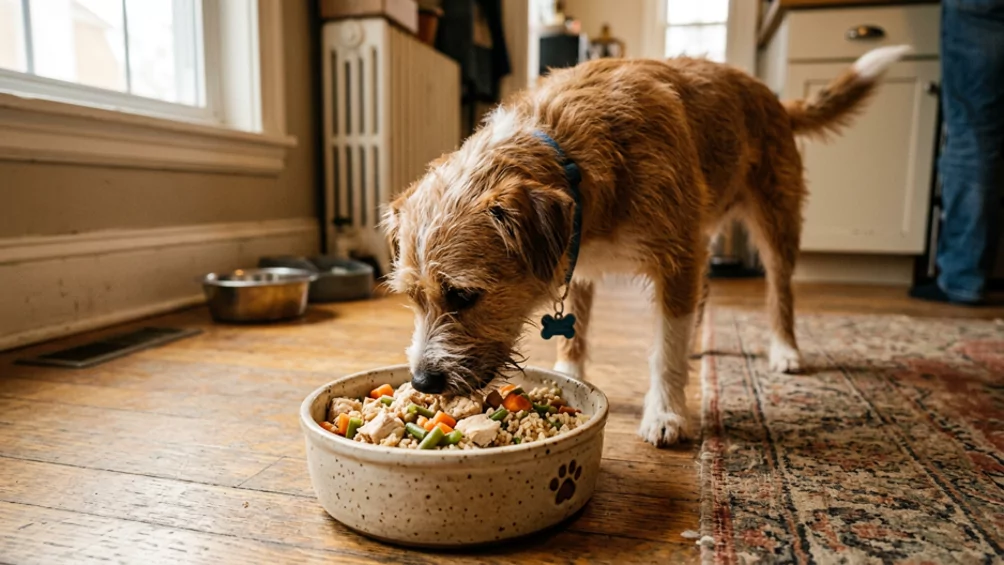
I finally found success with gently cooked, human-grade food (such as Lyka, Five Hounds, or Wolfit Box). This food is complete and balanced but lacks the heavy processing of kibble.
The results have been transformative:
- Stool Quality: Their faeces are now well-formed and firm.
- Body Composition: My dogs have become leaner, and their coats are shinier with less dandruff.
- Enthusiasm: They now have a genuine enthusiasm for their meals, which are gone in minutes.
Healthy Treats and Dental Maintenance for Greyhounds

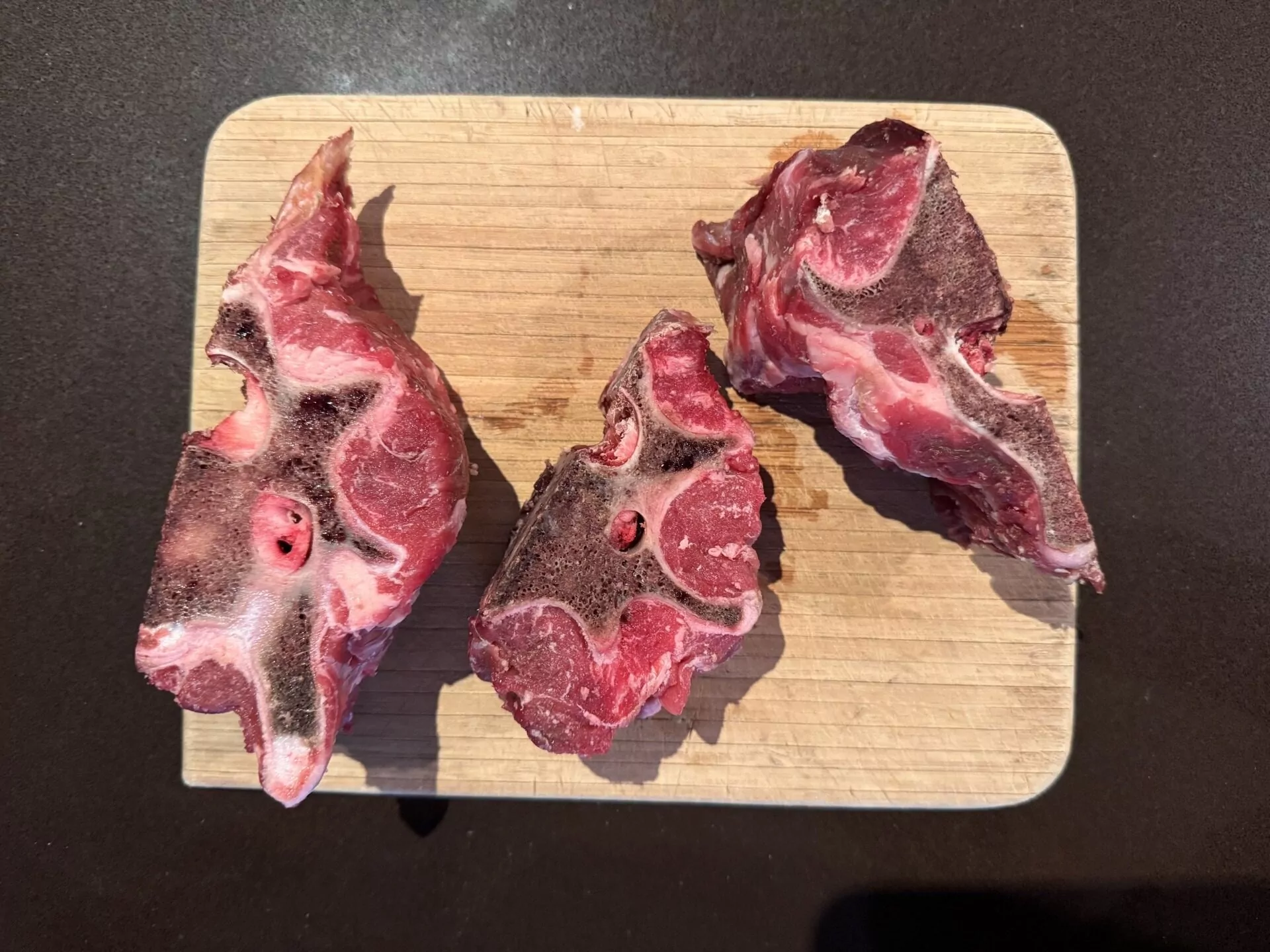
For dental health, I have found that no gel, water additive, or commercial treats are effective for Greyhounds. The only thing that truly works is chewing on bones at least 2–3 times per week. I use beef chuck bone or pig neck, cut into roughly 10cm x 5cm pieces.
I gently boil these for 5 minutes until the muscle turns brown; my dogs find them far more receptive to this than raw bones. Please be aware that bones carry risks like tooth fractures or obstructions, so always supervise your pet and consult your vet.
Summary: Living Their Best Life
Moving my Greyhounds to a fresh, gently cooked diet has been one of the best decisions I’ve made for their overall health.
- Their bodies are leaner,
- their digestion is stable,
- and their zest for life is visible at every mealtime.
The latest research supports the idea that fresh food is the key to longevity. If you want your Greyhound to live their best and longest life, I highly recommend transitioning away from the “brown bag” and toward fresh nutrition.
At Lynbrook Vet and Berwick Clyde Vet, we are passionate about the unique needs of Greyhounds. If you have questions about transitioning your hound to a fresh diet, we are here to help.
Book an appointment, or call our friendly team (03) 8373 0301