
I am a greyhound owner three times over. Needless to say that I know these dogs inside out…literally! Greyhounds are quite robust dogs and not a lot goes wrong with them. However, one of the most common conditions with Greyhounds is their propensity to dental disease and hence the need for regular dental checks and dental procedures.
Despite dental care such as regular tooth brushing, using water additives and dental treats, most greyhounds will in a few weeks to months develop plaque and calculus again. This can be very frustrating for owner who have just invested a few hundred dollars in having their teeth cleaned at the vets.
Infuriating right!! I hear you. So, what can we do to maintain dental health in our grey and for that matter in most dogs? One solution that works is bones! The right bone, of the right size, prepared in the right way and given to the dog for the right amount of time is the secret to the maintaining dental health in greyhounds and any other dogs that struggle with persistent plaque and calculus, and as a consequence with dental disease.
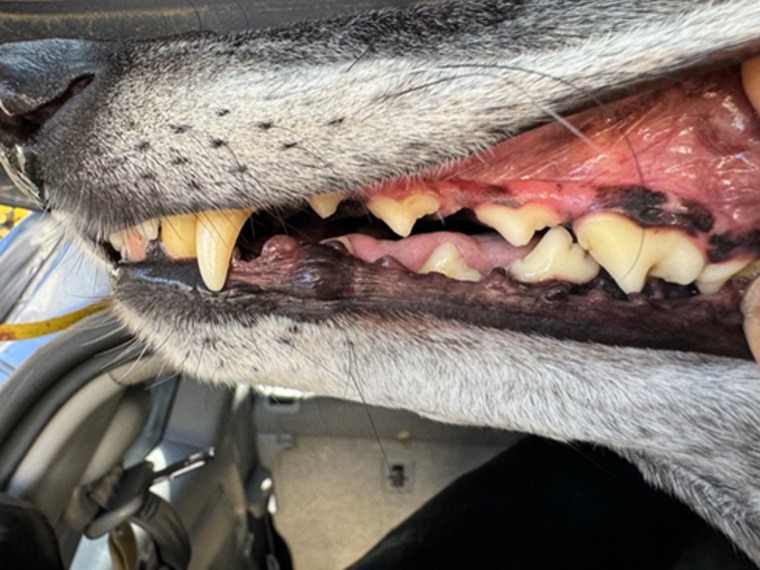
So why should we feed bones to our dogs. Here are the reasons why:
- Dental Health: Chewing on bones can help scrape away plaque and tartar from a dog’s teeth, promoting good oral hygiene and reducing the risk of dental disease. I can personally vouch for this.
- Mental stimulation: Gnawing on a bone can provide a dog with a mentally engaging activity, helping to alleviate boredom and potentially reducing destructive behaviours.
- Natural Nutrition: Bones are a natural source of essential minerals like calcium and phosphorus, which are important for a dog’s overall health, particularly bone and joint health.
- Reduced anxiety: The act of chewing can have a calming effect on dogs, helping to reduce anxiety and promote relaxation. A raw bone can serve as a healthy outlet for this behaviour.
5. Instinctual satisfaction: Chewing on bones is a natural behaviour for dogs and can provide them with a sense of satisfaction and contentment.
What can go wrong with feeding bones to our dogs?
- Upset tummies: Dogs can sometimes develop an upset tummy from eating the bone, the marrow, fat etc that is found with the bone. This presents in the form of vomiting and/ or diarrhoea.
- Constipation: Dogs that ingest a lot of the bones in the form of small bone shards can develop constipation and will struggle to defecate.
- Obstruction: Bones if swallowed whole can cause an obstruction in the stomach or small intestine. This is an emergency, and a surgery will need to be performed to remove the stuck bone.
- Tooth fracture: Occasionally a dog chewing the bone will get a fracture in a certain tooth if they bite down hard on a hard piece of bone. This tooth will then need to be removed.
- Mouth injuries: Bone fragments can cause cuts and abrasions in the mouth, tongue, and throat.
- Guarding and Fighting: Some dogs can get very possessive around bones and can either fight with one another or even attack their humans who approach them when they have bones. If your dog belongs to this category, then bones are not for them.
So, it seems that while bones are good for dogs, they can have some nasty side effects. Therefore, please use bones having understood the above risks. There is a way to minimise the above risks and still maintain dental health in your greyhound. Follow these simple steps.
1. The right bone: The right bone for the dog is about the size of the head of the dog. Do not use big marrow bones they are straight and hard bones and dogs are likely to shatter their teeth on these bones in particular. One of the bones that I have found works really well is the chuck bone. The chuck bone is a cut of beef from the shoulder area of the cow. It is known for its high collagen content and is quite meaty. The mean keeps the dogs interested in chewing. Further the bone is quite irregular which means that the dogs will chew at it in all different directions trying to get to the meat which helps clean the teeth thoroughly.


2. The right size: The chuck bone is quite big, and you can request the butcher to cut It into a few pieces for your dog. Remember to ask them to cut it roughly to the size of your dog’s head. The reason for this is so that he or she does is not able to swallow the bone hole. For a greyhound I normally ask the butcher to cut the bone into 3 pieces per chuck bone and give one piece to my dog every second day.


3. The right preparation: Bones should be fed raw and should has as much fat trimmed off them as possible. The fat can cause upset tummies in greyhounds. Leave the muscle as that will keep your grey interested in the bones. If you dog is fussy and will not eat raw bones, you can gently boil the bone for a few mins and then give the bone to him, and he is sure to enjoy chewing on them.
4. The right amount of time: Only let your grey chew the bones for only about 20-30 mins, 2-3 times per week. This is sufficient time to clean the teeth and to provide mental stimulation and enjoyment. At the start observe your dog and make sure they are not likely or trying to swallow the bone whole. If this is the case, then please take the bone away immediately. Else sit down and observe them and see how they use the front teeth to tear the meat and the back teeth to chew at the bone. This cleans the incisors and premolars and the molars. The only teeth that the bones cannot help clean are the canines which are not involved in the action of chewing, instead they are used for grasping prey, piercing and tearing, an action that is not involved in the chewing of bones.


How do I know that the bones are working:
- No side effects: If you are noticing any of the side effects such as an upset tummy or difficulty going to the toilet then stop immediately. If luckily your dogs are coping with the bones, then this is a good step.
- Reduced plaque and calculus: Flip your dog’s lip and compare the amount of calculus on the teeth once a week. This should continue to reduce. The calculus on the canines may not reduce at the same rate as these teeth are not involved in chewing on bones.
- Reduced bad breath: The bad breath from your dog’s breath should also reduce with each week that he or she successfully chews on bones.
In summary bones are not a substitute for a dental scale and polish at your veterinarian. In the scale and polish procedure we examine the teeth in detail, take dental x-rays and clean the plaque under the gum line which cannot be done by bones. Bones have their place in the maintenance of dental health after a scale and polish procedure. Remember they have some significant side effects, and they must be used once you accept these risks. To minimise the risks, follow the simple steps we have described above. Give the right bone, cut down to the right size, prepared in the right way and given to your pet for the right amount of time. If it works, it will not only help clean their teeth but will also give them satisfaction and make them happy…a win win for all!