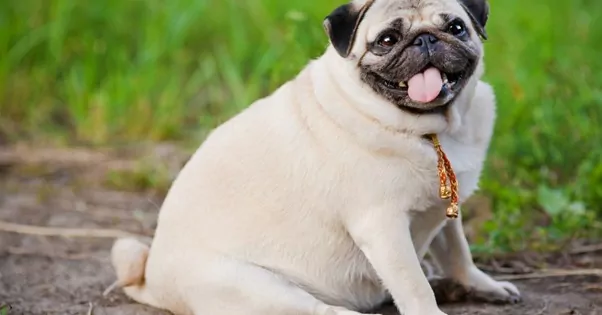
You’re probably here because you’re concerned your pet is overweight. Sometimes, it can be hard to tell if our furry friends are gaining weight. The changes can be gradual over a long period of time, and perhaps they have a lot of fur, making it hard to see the gain. Subtle changes can have a big impact on your pet’s health.
Pets that are overweight are likely to:
- Be less active or playful
- Have a shorter lifespan
- Be prone to mobility problems
- Have a greater risk during surgery
- Have high blood pressure
- Be at an increased risk of diabetes
And it’s more common than you might think.
Based on a report by the Australian Veterinary Association in 2020, almost half of dogs and a third of cats in Australia are overweight or obese.
The most common causes of weight gain are:
- too much food
- and not enough exercise.
Just like people, pets need to eat a good quality, balanced diet and get enough exercise to stay healthy.
Here’s the advice from our experienced Australian-certified veterinarians…
So, how can you tell if they’re overweight?
The most reliable way to determine whether your pet is overweight is to perform a Body Condition Score (BCS). A BCS is done by looking at your pet’s shape and feeling your pet’s ribs, waist and back.
Dog Body Condition Score
Dogs are scored on a scale of 1 to 9, 1 being emaciated and 9 being obese.
Ideal Dog BCS
A dog with an ideal body condition score of 5 will have ribs that are easily felt, a waist that is easily seen when viewed from above and a visibly tucked abdomen from the side.
Dogs that are overweight will have excess fat covering the ribs, so they’re not as easily felt. Their waist will not be visible from above, and there may not be an abdominal tuck from the side. Fat deposits may be seen over the lower back and base of the tail. Abdominal distension may also be present in obese dogs.
Here’s a dog BCS chart. You can compare it to your own dog (see below).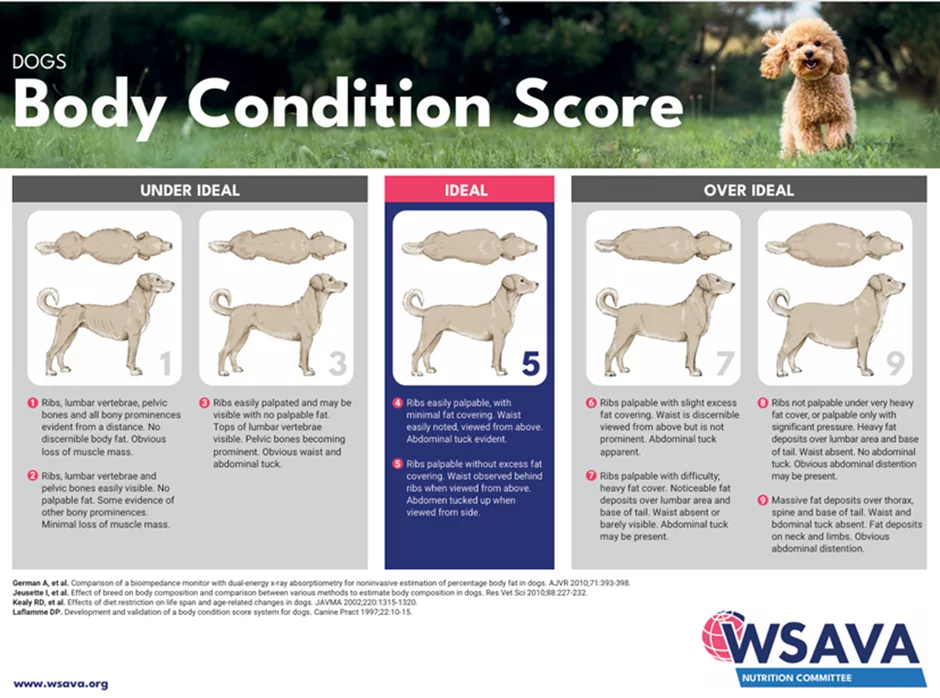
Cat Body Condition Scoring
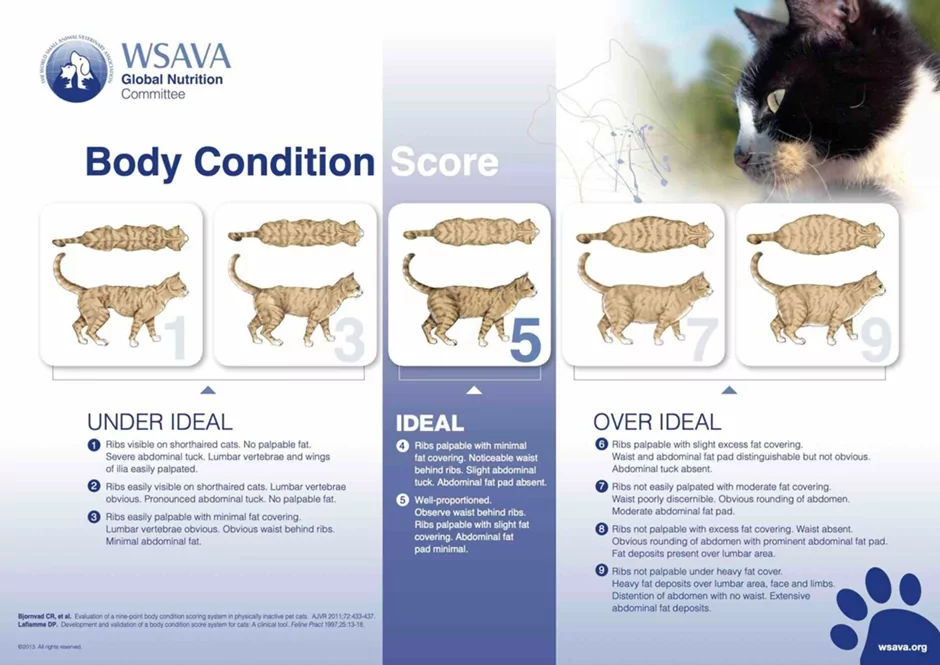
Cats are scored on a scale of 1 to 9, 1 being emaciated and 9 being obese.
Ideal Cat BCS
A cat with an ideal body condition score of 5 will have ribs, spine and hip bones that are easily felt and may be visible depending on coat length. The waist and abdominal tuck are seen when looking from above and the side. Their fat can be felt around the ribs, spine and hip bones. Note: cats have a primordial pouch, which is a flap of skin that hangs down near the cat’s hind legs. This pouch is normal and is not the result of being overweight. Cats in good body condition (BCS 5) will have a firm, upward-trending underbelly instead of a sagging one.
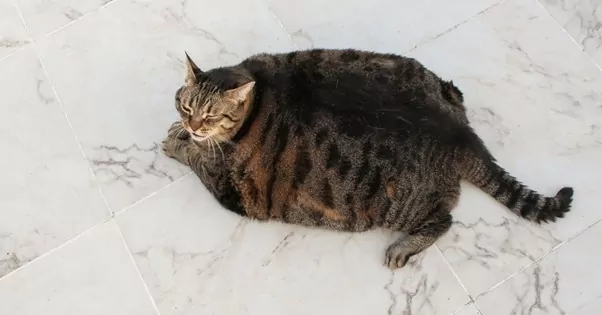
Cats that are overweight will have excess fat covering the ribs, so the ribs cannot be seen or felt easily. Waist will not be visible from above, and there will not be an abdominal tuck from the side. Fat deposits may be seen over the lower back, neck and chest. Abdominal distension may also be present in obese cats. Here’s a cat BCS chart. You can compare it to your own cat (see below).
How can I help my pet lose weight?
Weight loss is a journey, and it starts with a good diet and the right amount of exercise.
Choose a diet of high-quality ingredients and avoid foods that are high in preservatives, sugars or processed foods, including treats. Avoid table scraps and try to give healthy treats only in moderation. Better still, measure out the correct portion of your pet’s food each day, and then put some of that food aside to use as treats. This allows you to reward your pet without increasing their overall food intake.
Portion Control
The amount of food your pet needs depends on your pet’s size, age, breed, health status, and activity level. Take a look at the feeding guide on your commercial pet food bag/s, as these give recommendations based on your pet’s weight. However, these are only general guidelines, and your vet will be better able to advise on the appropriate portion size for your individual pet.
Lastly, you can also help your pet lose weight by ensuring they get enough exercise and play time to burn off those extra calories! As with everything, moderation is key! Gradually increase the amount of exercise your pet is doing, so as not to overwhelm them.
Weight Loss Clinic for Pets
For those pets that struggle to lose weight or for owners who want a more structured approach, we also offer a Weight Loss Clinic that designs a custom program for you and your pet with regular check-ins and progress monitoring.
Learn more about it here.
This is an eight-week program with fortnightly consults, weigh-ins and progress photos. We also generate a weight loss profile that provides recommendations specific to your pet.
As part of this program, we help transition your pet onto a Satiety diet from Royal Canin. This is a specialised diet that comes in wet and dry forms, for dogs and cats, to meet your pet’s preference. This diet has been specially designed to facilitate weight loss and prevent weight regain. It is safe for long-term weight management and has high natural fibre levels to help pets feel full and reduce begging. It has a high protein content to maintain muscle mass during weight loss.
If you have any questions regarding weight management or our weight loss clinic, please get in touch or book an appointment.