As our dogs grow older, many owners assume that slowing down is just a natural part of ageing. But what if your senior dog is slowing down because it’s in pain, and simply not showing it in a way you recognise?
Arthritis, or Osteoarthritis (OA), is one of the most common causes of chronic pain in older dogs. In fact, studies show that up to 80% of dogs over the age of 8 and 20% of dogs over the age of 1 are affected (source).
The challenge is that dogs don’t always limp or cry out. Pain can be subtle, and many dogs adapt their behaviour to hide discomfort.
Let’s explore the visible and hidden signs of arthritis pain so you can better understand what your dog may be feeling and when to seek help.
What is Arthritis in Dogs?
Canine arthritis is a degenerative joint disease that causes inflammation, pain, and reduced mobility. It occurs when the cartilage within a joint deteriorates, leading to bones rubbing together, which can cause discomfort and pain. It tends to progress gradually, making it difficult for pet owners to notice until the condition is more advanced.
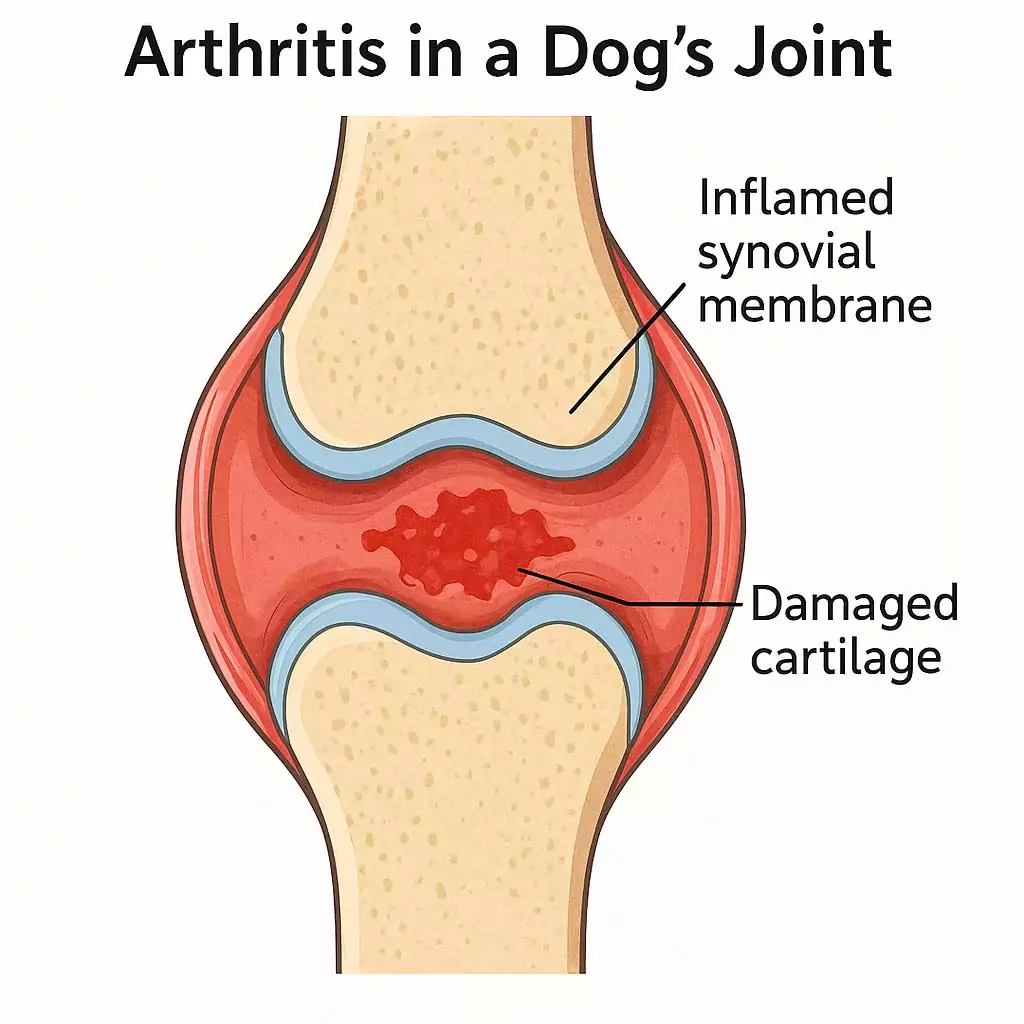
Dogs are incredibly resilient. They often adjust to pain slowly and without complaint, but that doesn’t mean they should have to live with it. Often, it’s only after starting pain relief that we notice just how much discomfort our dogs are in. Their brighter mood and increased activity speak volumes about the pain they were previously in.
The good news is: there are effective ways to manage arthritis. With a tailored plan that may include things like weight management, joint support, and pain relief, many dogs regain comfort and mobility.
Visible Signs of Arthritis in Dogs
Pain in dogs doesn’t always present as we’d expect. While some symptoms are easy to spot, others may be more subtle and are often associated with ageing rather than diseases like osteoarthritis.
1. Limping after exercising
Limping is when a dog avoids putting full weight on one (or more) of their legs, often walking unevenly or awkwardly. You might notice your dog holding one leg up completely and hopping on the others, especially if they’re trying to avoid using it at all. Some dogs may still use all four legs but take shorter or more careful steps.
Here’s an example:
2. Lagging behind on walks
Lagging behind on a walk means your dog is walking more slowly than usual or struggling to keep up with you. Instead of walking eagerly beside or slightly ahead, they may drift a few steps behind or seem reluctant to move forward. Some dogs might stop more frequently to rest, hesitate at curbs or inclines, or simply appear less enthusiastic about continuing the walk. You may also notice them pulling back on the lead or taking shorter strides.
3. Slowing to rise
Slowing to rise means your dog is taking more time or effort to get up from a lying or sitting position. Instead of springing up quickly like they used to, they might push themselves up slowly, shift their weight awkwardly, or hesitate before standing. You may notice them using their front legs to pull themselves up or their back legs trembling slightly as they try to stand. Sometimes they’ll pause in a half-standing position before fully rising, or they may struggle more on slippery floors or first thing in the morning.
4. Difficulty jumping
Difficulty jumping is often one of the first signs that something isn’t quite right with your dog’s mobility. You might notice your dog hesitating before jumping onto the couch, into the car, or onto the bed. Instead of leaping up confidently, they may pause, try and fail to jump, or avoid it altogether by looking for another way up. Some dogs will attempt a jump but only make it partway, needing help to finish.
5. Difficulty with stairs
Difficulty with stairs can show up in subtle ways, especially if your dog is starting to experience pain or stiffness. You might notice them moving more slowly on the stairs, taking each step cautiously or one at a time. Some dogs may hesitate at the bottom or top of a staircase, as if unsure whether they want to attempt it. Others might bunny-hop their back legs together on the way up or drag their back feet slightly as they go down. You may also see them shift their weight awkwardly, stumble, or need to pause partway through.
Here is an example:
Hidden Signs of Arthritis in Dogs
Sleep disturbances/ sleeping in different places than usual
Sleep disturbances can be an early sign that your dog is uncomfortable, particularly overnight when they’re meant to be resting. You might notice your dog changing positions frequently during the night, struggling to get comfortable, or waking up more often than usual. Some dogs may pace, pant, or whine in the middle of the night, while others may start sleeping in unusual places, like on hard floors instead of their usual soft bed. Possibly because cooler surfaces feel better on sore joints.
Irritability
Irritability in dogs can be a subtle sign that they’re feeling unwell or in pain. A normally friendly or tolerant dog might start growling, snapping, or avoiding touch, especially if you reach for a sore area like a leg, back, or hips. You may notice them flinch when handled, move away when you try to pat them, or show less patience with other pets or young children. Some dogs become quieter and withdrawn, while others might seem more reactive or unsettled than usual.
Less grooming and changes in their coat condition
A decline in grooming habits or changes in coat condition can be another quiet signal that your dog isn’t feeling their best. You might notice that their fur looks dull, greasy, or more tangled than usual, especially in areas that are harder for them to reach, like their hips or lower back. Dogs in pain may stop grooming altogether or avoid certain movements that used to be part of their normal routine, such as turning to lick or scratch themselves. You may also see flaky skin, more shedding, or patches where the coat appears thinner or unkempt.
Aggression
Aggression in dogs can take many forms and is often a response to pain or discomfort, especially if it appears suddenly in a dog who’s normally calm or friendly. You might notice your dog growling, baring their teeth, or snapping when touched in certain areas, particularly if those areas are sore.
Social withdrawal
Social withdrawal is a subtle change that can suggest your dog isn’t feeling quite right. A usually affectionate or social dog may start spending more time alone, choosing to rest in quiet, out-of-the-way places instead of being near family members or other pets. They might no longer greet you at the door, follow you around the house, or show interest in play or cuddles. Some dogs may avoid eye contact, seem distant or disinterested, or become less responsive to their name or usual cues.
Loss of playfulness
You might notice they’re no longer excited to play with their favourite toys, chase a ball, or initiate games with you or other pets. Instead of jumping up to join in, they may watch from a distance, walk away, or lie down instead of engaging. Even simple, low-energy games they once enjoyed, like tug-of-war or gentle fetch, might suddenly seem too much effort. While it’s easy to chalk this up to age or a quiet day, a consistent drop in playfulness can often be a clue that your dog is dealing with pain, stiffness, or general discomfort.

A Quick Guide to Arthritic Signs in Dogs
Is your dog displaying any of the following?

Let’s Help Your Dog Move More Comfortably
If you’re concerned your dog may be showing signs of arthritis or pain, we’re here to help.
Subtle changes like:
– slowing down,
– avoiding stairs,
– or seeming less playful
can be early signs that something isn’t quite right.
Don’t ignore these quiet signals as your dog could be trying to tell you they’re uncomfortable.
Book an appointment with our team so we can assess what’s going on and create a personalised plan to keep your furry companion comfortable, active, and happy.