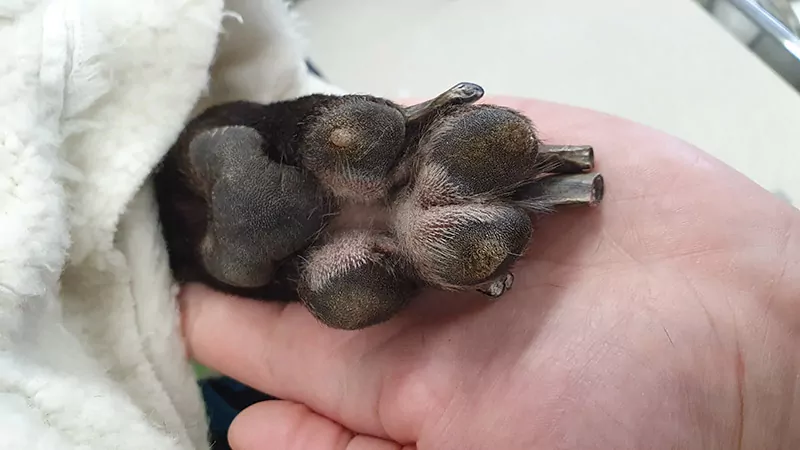
Does your greyhound have a corn?
Is your greyhound sore in the front feet (or back feet) and limping? Is he or she more sore when walking on hard or rough surfaces like asphalt and less so when walking on grass? Is this lameness not responsive to pain relief medications given by your veterinarian? Is your veterinarian struggling to find the source of your dogs pain?
If your answer is yes to the above questions, then it is time we have a close look at your greyhound’s pads as they might be suffering from Corns. Another condition that might cause very similar signs is grit in pad. Grit in pad can be diagnosed through a quick X-ray but more on this condition later. Let’s talk corns for now.
Corns are quite common in greyhounds
Corns are the most common skin condition in sighthounds such as greyhounds. About 5%-6% of all retired greyhounds suffer from corns, 80% of corns occur in the forelimbs and a further 80% occur in digits 3 and 4 (the front dew claw being digit one, counting from the inside out). Corns cause pain and lameness in greyhounds and stress for the owners who find it distressing to see their Greyhound struggle to walk on hard surfaces and miss them doing their zoomies. Corns can be debilitating for greyhounds and should be treated.
What is a corn?
 A corn is a circular area of hardened skin on the pads of greyhounds. The corn has a deep root that impinges on the underlying flexor tendon and the bone. The flexor tendon causes the toes to curl so that the pads are in contact with the ground and bear the weight of the dog. The corns can protrude from the surrounding surface and when the greyhound puts weight on the leg, the force is transmitted through the corn to the underlying flexor tendon and the bone, causing pain and lameness.
What is the current theory on the cause of corns in Greyhounds?
 The current theory around the cause of corns in greyhounds is that this breed has reduced fibro-adipose tissue (a fancy term for fatty tissue!) in the pads compared to other dog breeds. This tissue is like the sole of a shoe that cushions the weight. With less of this tissue the skin of the pad experiences repeated and increased pressure. The skin reacts by thickening, ultimately leading to the formation of a corn (in very simplistic terms).
Previous theories of corns being caused by viruses or foreign material in the pads have been discarded due to a lack of supporting evidence.
What is the current gold standard for the treatment of Corns in Greyhounds?
As corns are thought be caused due to increased pressure on the affected toes, the recommended gold standard is a procedure where the superficial digital flexor tendon of the affected toe is surgically cut just below the wrist or the hock in a greyhound. This procedure is called a tendonectomy. The rationale behind this approach is that cutting the flexor tendon unloads the pad, reducing the pressure, causing the lameness to resolve and the corn to grow out and disappear.
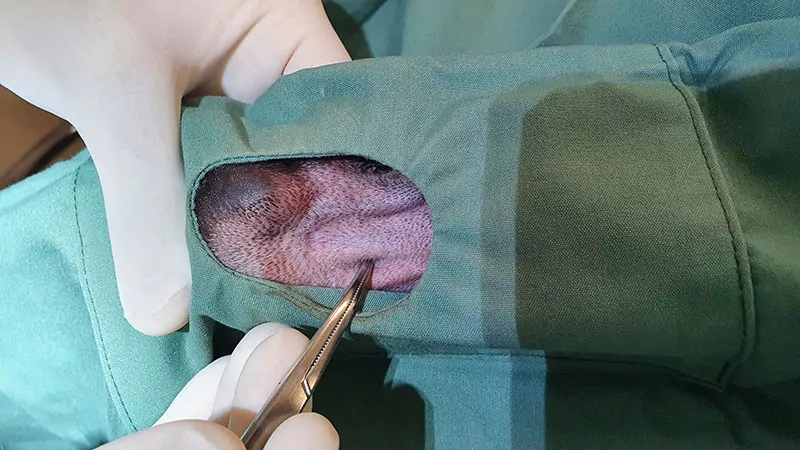
Tendon prior to inscission
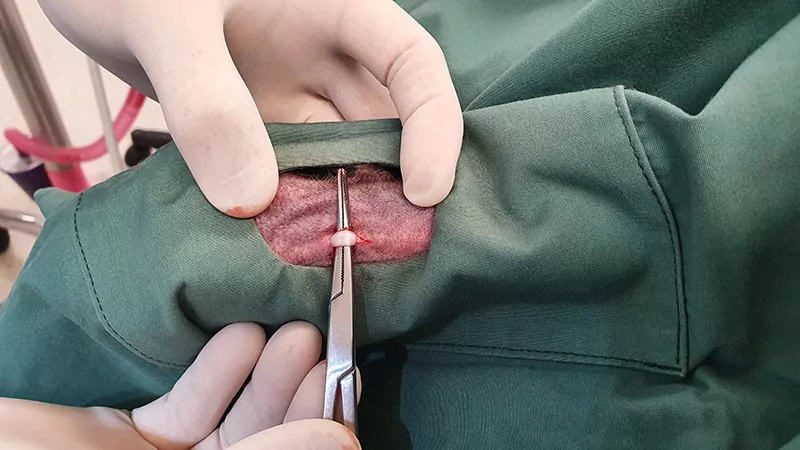
The tendon
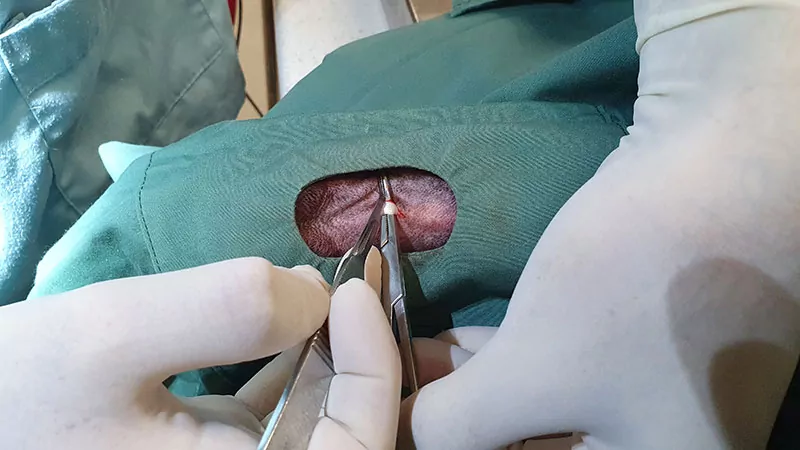
Cutting the tendon
This procedure has significant practical advantages as well. It is simple to perform and the recovery from surgery is relatively quick and fraught with fewer complication as the surgery site is not a weight bearing surface where the risks of stitches opening up and the wound being infected are a lot higher. Within about 10 days time the surgery site would have healed, and the lameness should improve.
In a study of 29 dogs with corns treated as described above, 26 of the 29 dogs showed improvement at day 7, with 23 dogs showing significant improvement and 3 showing moderate improvement. The Three dogs that did not show an improvement had preexisting conditions that affected their recovery. At the 6–8-week period only 21 dogs remained in the study and of these 17 showed NO lameness and four dogs has slight lameness remaining. All owners were satisfied with the outcome and the dogs were happier and willing to exercise normally.
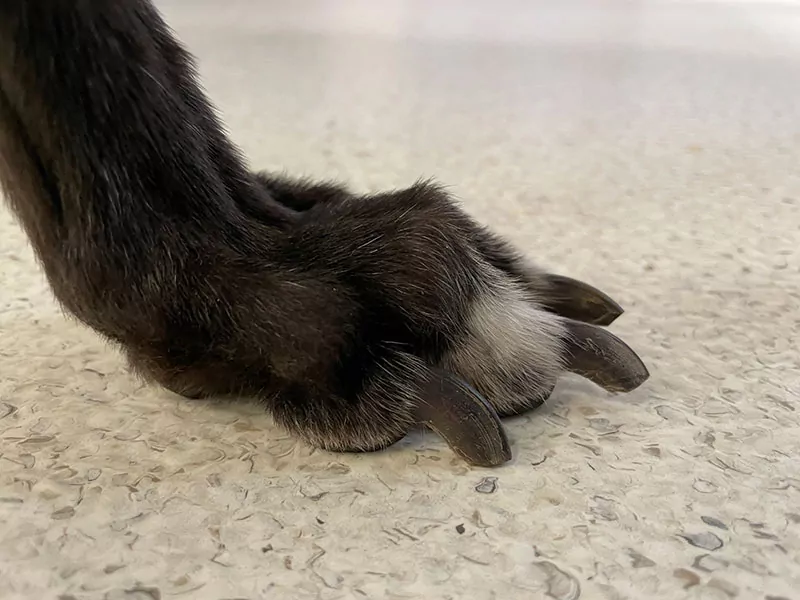
Before
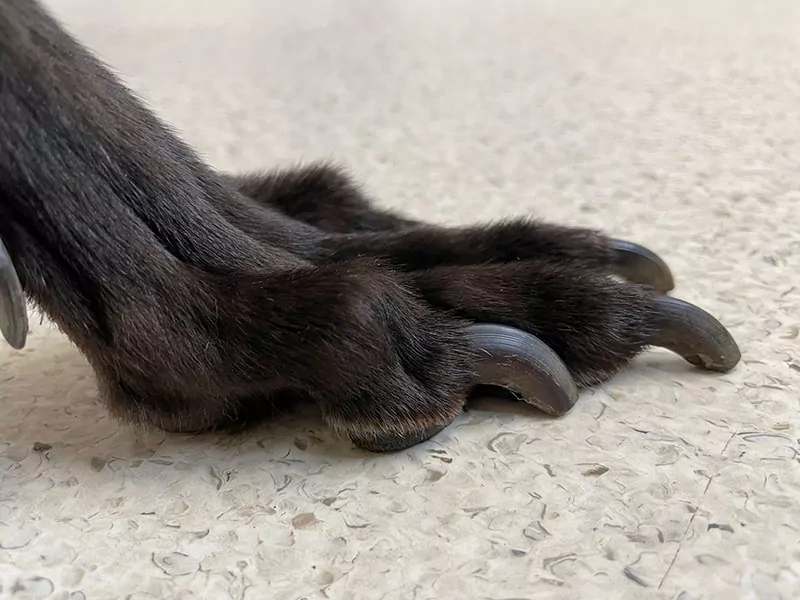
After
Lynbrook Vet has the answers
At Lynbrook vet we have significant experience with lameness in greyhounds and especially the treatment of corns and grit in pad. So, if your greyhound is sore, please bring him or her in to see Dr Kunal or Dr Alina and we will be able to assist in the diagnosis and correct management of their condition. Your greyhound does not need to suffer and be in pain because of corns, at Lynbrook vet we have the answers so please give our team a call on 03 8373 0301 to book an appointment.
Can dogs have corns on their paws?
Yes they can. A corn is a circular area of hardened skin that grow on a dog's paw pad. They are a very typically occurrence in greyhounds.
Why do greyhounds get corns?
The breed has reduced fibro-adipose tissue in the pads compared to others. With less of this tissue the skin of the pad experiences repeated and increased pressure and it reacts by thickening,
How do you treat greyhound corns?
The most effective method is to remove a corn via surgery called a tendonectomy.