Feeding magpies and other wild birds mince, bread or leftovers can do serious harm, even when it comes from a kind place. These foods don’t have the calcium young birds need, so fledglings can develop metabolic bone disease, which leaves their bones so weak they break during normal first flights.
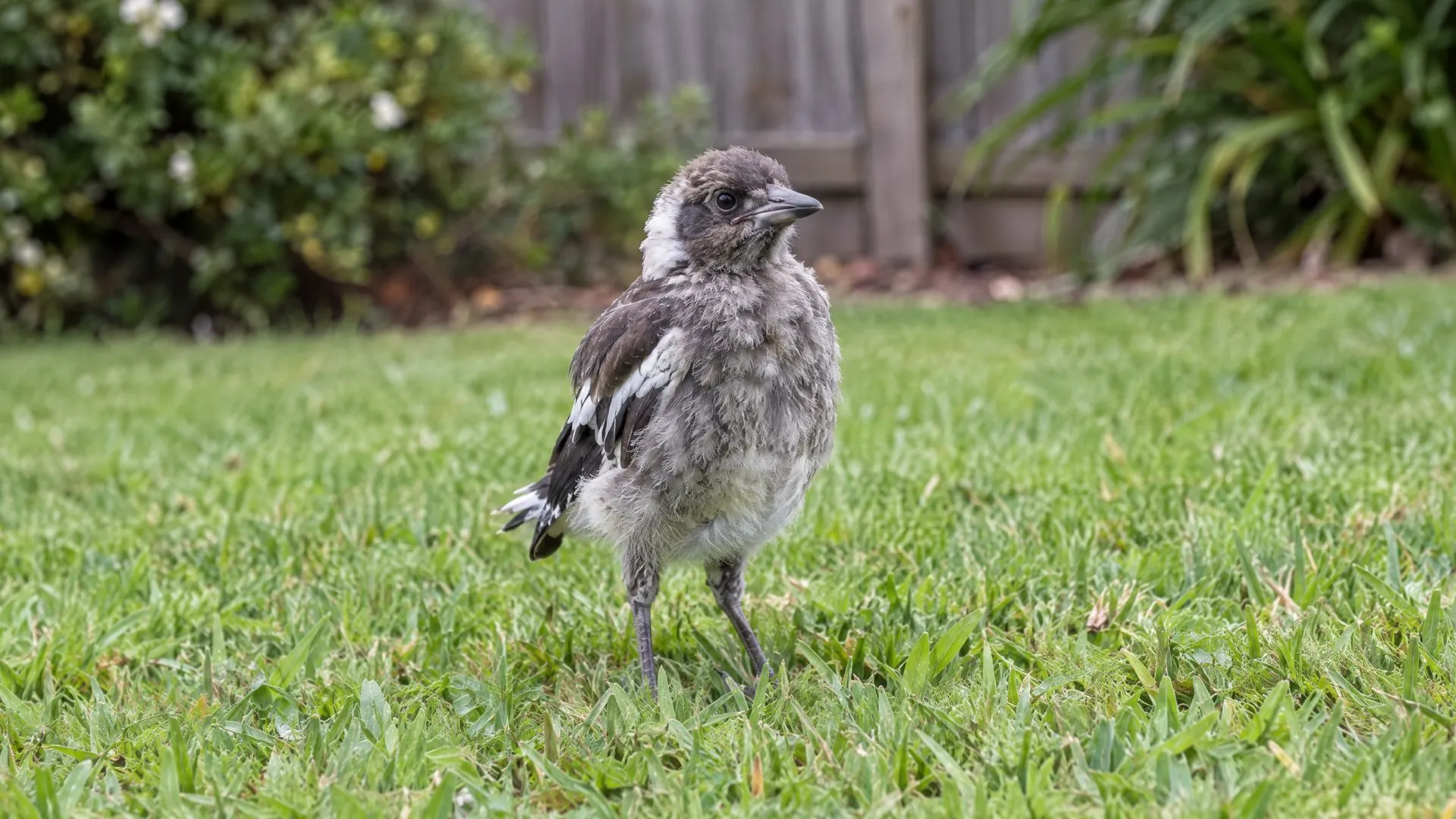
Every spring, baby magpies, ravens and other fledglings hop around backyards in Lynbrook and nearby suburbs. Below we explain what human food does to a growing bird, why the damage so often shows up as a broken bone, and what you can do instead to help.
Wildlife is always welcome at Lynbrook Vet, and we treat sick and injured wildlife at no cost to you. This post was written by one of our vets after treating three magpie fledglings with broken bones caused by the wrong diet.
What happens when wild birds eat human food?
Human food fills wild birds up without giving them what they need. Bread is mostly empty calories and mince is low in calcium, so birds that rely on them miss out on the minerals they’d get from insects and other natural food. Young birds feel it first, because their skeletons are still growing.
That’s why BirdLife Australia doesn’t encourage feeding wild birds, and WIRES doesn’t recommend feeding native birds at all. Most birds already eat a balanced natural diet: WIRES notes that 90% eat insects and nectar, seed or fruit.
Most people who feed birds do it out of kindness, and plenty of us do it. Close to half of Australians feed wild birds, according to BirdLife Australia. The trouble is that what looks like a good meal to us can be a poor one for a bird.
Why do baby birds need so much calcium?
Growing birds need calcium and phosphorus in the right balance, plus vitamin D to absorb the calcium, to build strong bones. When a diet has too little calcium or too much phosphorus, the body can’t build a solid skeleton. Bread, mince and most leftovers don’t come close to the balance a growing bird needs.
The three work as a team. The MSD Veterinary Manual explains that too much or too little of one throws out the balance of the others. Birds make active vitamin D when sunlight reaches their skin, and they need it to take up calcium from their food.
Raw meat is a particular problem. WIRES notes that it lacks calcium and is high in phosphorus, which is the opposite of what a growing bird needs.
What is metabolic bone disease in birds?
Metabolic bone disease is a condition where a bird’s bones don’t harden properly because its diet is short on calcium or vitamin D. The bones end up soft, thin and easily broken, and they can bend or twist out of shape as the bird grows. In the wild fledglings we see, the cause is the wrong diet.
The MSD Veterinary Manual describes the bones in this condition as soft, deformed and easily fractured. You often can’t tell from the outside. A fledgling with metabolic bone disease can look like any other baby bird until it lands badly.
Why do fledglings with weak bones break them so easily?
Fledglings spend a few weeks on the ground learning to fly, and clumsy take-offs and rough landings are part of the process. A healthy bird’s bones cope with these knocks. A bird with metabolic bone disease can break a wing or leg from a bump that wouldn’t hurt a healthy bird at all.
A fledgling on the ground is normal. Wildlife Victoria says fledglings found on the ground are one of its most common calls every spring, and that magpies, ravens, butcherbirds and magpie-larks normally spend a few weeks on the ground before they take flight. That’s a lot of practice landings for a bird with weak bones.
Vets call these breaks pathologic fractures: breaks that happen in bone already weakened by disease, under everyday stress that wouldn’t harm a healthy animal.

We’ve seen this first-hand. The X-ray above is from one of three magpie fledglings we treated recently, each with fractures in bone weakened by metabolic bone disease. It’s not only magpies: we commonly see it in ravens and other meat-eating birds people feed, such as kookaburras. Sadly, a fledgling with these injuries can’t survive in the wild. Its bones can’t support flight, and a bird that can’t fly can’t find food or escape predators. In these cases, humane euthanasia is the kindest option to stop further suffering.
How can feeding adult birds hurt their chicks?
Adult birds often carry the food you put out straight back to the nest. So even if you never feed a chick yourself, a magpie that collects mince or bread from your yard can pass that poor diet on to its babies, during the weeks when their bones are growing fastest.
Timing makes it worse. In Victoria, magpies breed from August to October, so spring is when backyard feeding does the most damage to the next generation. BirdLife Australia warns that a lack of calcium in young birds can cause brittle bones and beaks and long-term metabolic bone disease.
Mince and bread don’t hurt adult birds overnight. The harm shows up in the chicks they raise, as bones too weak to survive learning to fly.

Why is mince bad for magpies?
Mince is low in calcium and high in fat and phosphorus, so it can’t build strong bones in growing magpies. It also sticks to their beaks, where it can rot and cause a bacterial infection. A magpie fed mince regularly can end up raising chicks with weak, fracture-prone bones, even if the adult bird seems fine.
BirdLife Australia names mince as one of the foods to avoid, for exactly these reasons. Cooked or raw, it’s the wrong balance for a bird that would normally be eating beetles, grubs and worms. Kookaburras and ravens, the other meat-eating birds people often feed, face the same problem.

Is bread bad for birds?
Yes. Bread fills birds up with empty calories, so they eat less of the food that keeps them healthy. Mouldy bread can cause aspergillosis, a serious fungal infection, and bread left in ponds and lakes can rot and feed toxic algae. It’s a poor choice for every wild bird, ducks included.
BirdLife Australia adds that large pieces of bread can get stuck in a bird’s crop, the pouch in its throat where food is stored before digestion. WIRES points out that bread and other processed foods are high in salt, which can cause sickness and deformities, especially in young birds.
What do magpies eat in the wild?
According to WIRES, Magpies forage on the ground for insects, worms, spiders, lizards, mice and seeds. One of their favourite foods is the scarab beetle, the pest that does so much damage to lawns. That natural diet gives magpies and their chicks the calcium and nutrients they need, and they’re very good at finding it, even in the suburbs.
The magpies digging in your lawn are doing you a favour, and they’re feeding their chicks far better than we can.

| Food | Why it's a problem |
|---|---|
| Bread, crackers and biscuits | Empty calories that fill birds up. Mould can cause aspergillosis, and large pieces can get stuck in the crop. |
| Mince and raw meat | Low in calcium and high in fat and phosphorus. Sticks to beaks and can cause infection. Linked to metabolic bone disease in chicks. |
| Cheese and other dairy | Birds generally can't digest lactose, and cheese is high in fat and salt. |
| Honey or sugar water | The wrong kinds of sugar for birds. |
| Avocado, citrus, onion and garlic | On BirdLife Australia's list of foods to avoid altogether. |
| Leftovers and processed food | High in salt and fat, which can cause sickness and deformities in young birds. |
Sources: BirdLife Australia and WIRES.
How can you help wild birds without feeding them?
The best way to help wild birds is to make your garden a place where they can find their own food. Plant local native shrubs, leave some leaf litter for insects, put out a shallow bowl of clean water and keep your cat inside. Your backyard birds will be healthier for it, and so will their chicks.
- Plant natives: flowering native trees and shrubs feed nectar-eating birds and possums and give birds shelter. BirdLife Australia’s main recommendation is planting natives rather than feeding.
- Leave some mess: leaf litter, mulch and a patch of lawn are where the insects, worms and grubs live. That’s the food magpies raise their chicks on.
- Offer clean water: a shallow dish or bird bath, cleaned and refilled every day.
- Keep pets in check: keep your cat indoors and your dog away from fledglings on the ground, especially in spring.
What should you feed magpies if you already feed them?
We don’t advise feeding wild birds, but if you’re going to feed magpies anyway, skip the mince and bread. Offer insects like mealworms or crickets, or an insectivore mix such as Wombaroo Insectivore Rearing Mix, and keep it small and occasional. BirdLife Australia suggests treating it as a snack, not a meal, offering it no more than once a week and cleaning the feeding area every day.
Regular feeding also makes wild birds overly dependent on people, which brings its own problems, so we’d much rather you didn’t feed them at all. If you do, BirdLife Australia also suggests fresh water every day and not feeding large flocks at once. If birds at your feeder look sick, stop feeding, because crowded feeding spots spread disease.
What should you do if you find a fledgling on the ground?
Most of the time, leave it where it is. A fledgling on the ground is normal, and its parents are usually close by and still feeding it. Only step in if the bird is injured, in danger, or you haven’t seen the parents for several hours. Don’t feed it or give it water by mouth.
- Watch from a distance for a while. Parents often leave fledglings alone while they collect food, so check the nearby trees for them.
- Check the bird is bright and alert, with its eyes open, and hopping, running or perching. That’s a healthy fledgling.
- If it’s in danger, such as on a road, move it into a nearby shrub or tree. Its parents won’t reject it because you’ve touched it.
- Keep your dog and cat away from the area until the bird is flying.
- Don’t feed it, and never force water into its mouth. Water given by syringe or dropper can go into a bird’s lungs.
- If it’s hurt, featherless, fluffed up with its eyes closed, or can’t stand, put it in a covered box somewhere dark, warm and quiet, note exactly where you found it, and give us a call. If we’re closed, call Wildlife Victoria on 03 8400 7300.
Not sure whether a baby bird needs help? Our baby bird flow chart walks you through it, and our guide to what to do with an injured bird or wildlife covers getting it to us safely.
What are the signs of metabolic bone disease in a fledgling?
A fledgling with metabolic bone disease may struggle to stand, perch or hop, hold a wing at an odd angle, or have legs, wings or a beak that look bent or misshapen. Some will seem quiet and fluffed up. If you notice any of these signs, bring the bird in so we can examine it and take an X-ray.
Found a wild bird that needs help?
The kindest thing you can do for wild birds is let them find their own food: they’re natural experts at it. If you find a fledgling that’s hurt, can’t stand or looks unwell, give us a call on 03 8373 0301 or bring it straight in. There’s no cost for wildlife care. If we’re closed, call Wildlife Victoria on 03 8400 7300.
This article is general information only and is not a substitute for advice from a veterinarian. If you are worried about a wild animal or your own pet, please contact Lynbrook Vet or Wildlife Victoria.
Frequently asked questions
Can magpies eat bread?
Magpies will eat bread, but it’s bad for them. Bread has almost no nutritional value for a magpie, fills it up so it eats fewer insects, and gives its chicks none of the calcium they need. Mouldy bread can also cause a fungal infection called aspergillosis. Skip the bread and let magpies forage for themselves.
Can magpies eat cheese?
No. Birds generally can’t digest lactose, and cheese is high in fat and salt, so BirdLife Australia lists dairy among the foods not to give wild birds. Cheese also goes mouldy quickly outside. If magpies visit your yard, the best things you can give them are clean water and a garden full of insects.
Is it OK to feed ducks bread?
No. Bread fills ducks up without proper nutrition, and soggy leftover bread rots in the water, which can feed toxic algae. If you’d like to feed ducks at a local lake, a small handful of frozen peas is a better choice, as ABC News recommends. Never give them uncooked rice, which can expand in their stomachs.
Will wild birds starve if I stop feeding them?
No. Wild birds are experts at finding their own food, even in the suburbs, and backyard feeding isn’t necessary for their survival. Young birds actually need to learn to forage for themselves. If you’ve been feeding regularly, the birds will go back to their natural diet of insects, seeds, nectar and fruit.
Can I give a baby bird food or water?
No. Feeding a baby bird the wrong food can make it sick, and water given by syringe or dropper can go into its lungs. If a bird is in your care for a short time, offer only a shallow dish of water and never force it to drink. Then give us or Wildlife Victoria a call for advice.
Does it cost anything to bring injured wildlife to Lynbrook Vet?
No. Wildlife is always welcome at Lynbrook Vet, and there’s no cost to you for bringing in a sick, injured or orphaned native animal. We triage every animal when it arrives, treat it, and work with registered wildlife carers who look after it until it’s ready to be released back into the wild.