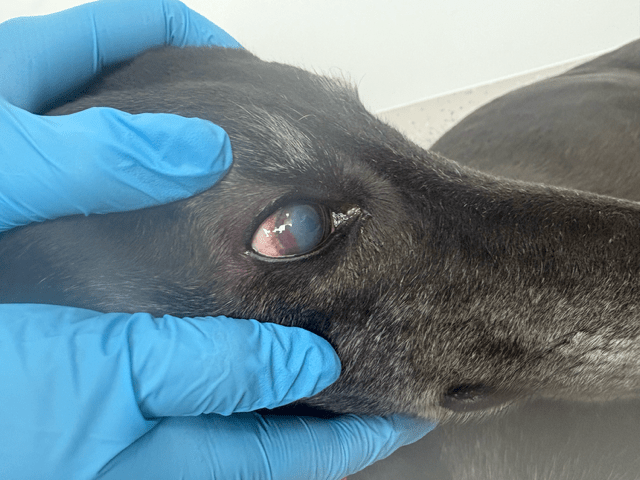

We all have an idea of what cancer is in our minds, but what is it?
Cancer, in essence, means abnormal cells that divide, multiply and invade into normal tissues. Abnormal cells can arise from anywhere and any cells in the body which means that we don’t always “see” cancer as an external sign in our pets.
Another important note is that not all “cancers” are bad! Cancers are broadly categorised into “benign” and “malignant” forms. Your veterinarian may use these terms to describe them.
“Benign” means that the cancer is not harmful or does not show invasive characteristics. “Malignant” means that the cancer has aggressive or invasive properties, and these are usually more harmful in nature and/or have a higher chance of spreading around the body.
What can cancer look like?
The most common way owners may detect a possible cancer is by finding a lump or bump on their pet/s. Whenever this occurs, we encourage owners to bring their pet/s in for a health check, and your veterinarian will advise on what diagnostic option is best. We also encourage owners to make it a routine to feel their pet’s skin and coat, making sure to check areas that are not commonly looked at, such as under the belly, legs and under the tail.
If a lump is detected, further diagnostics may involve taking a fine needle to aspirate a sample of the lump, which means we use a needle and syringe to collect a small sample of cells from the lump. This sample may either be looked at in the clinic using our microscopes or be sent off to the lab for a pathologist to interpret.

Note: Fine needle aspirate samples are not always diagnostic as it is only a small representation of the cells inside the lump, but may allow our veterinarians to plan the next step for your pet. For example, if the results show it is most likely a benign (not nasty) lump, we may either elect to monitor it or remove the lump with small margins. If the results suggest it is something a bit more sinister, your vet may recommend removal with larger margins so that we have the best chance of removing it completely.
Another diagnostic option for lumps commonly offered is to surgically remove the lump and send the entire lump to the lab for testing. Alternatively, if the lump is in a tricky location to remove or it is very large, your veterinarian may elect to take a biopsy sample instead.
What if my pet does not have any external lumps? Can they still have cancer?
Yes, pets can have cancer even if there are no externally-detectable lumps or bumps. Cancers such as leukemia and cancers involving internal organs may not be obvious externally. However, these patients may share common signs with each other.
These may include:
- Steady weight loss over time despite normal amounts or more food being fed.
- Loss of appetite.
- Increased weakness over time and/or reduced exercise tolerance.
- Fever of unknown origin.
- On-going vomiting and diarrhoea.
- Enlarged lymph nodes without underlying infection.
Although these signs can be seen commonly across many conditions, we encourage pet owners to seek veterinary attention early when these signs are noted.

How can I be cancer-conscious for my own pet?
Cancers can happen with any breed, age and sex of pet. Although falling under certain breed, age and sex categories can affect what cancers are more likely to occur, most cancers occur randomly.
No matter what category your pet may fall into, it is best to be proactive with checking your pets regularly for any abnormalities. These may include:
- Routinely patting down and checking their coat and skin for lumps and bumps.
- Monitor their normal feeding patterns. Are they eating as well as they normally would be?
- Monitor activity levels- is their activity level reducing? Are they spending more time sleeping compared to usual?
- Routine screening blood and urine testing is recommended in dogs over 7 years old and Cats over 8 years old.
Cancer can be a scary topic to discuss. Sometimes even just Googling something like ‘Does my dog have cancer?’ can take bravery. Staying vigilant and proactive, like you’re doing now, just shows what a great pet owner you are.
We hope this information was helpful. Please feel free to reach out to us if you have any questions. Our team is kind, supportive and here to help. Get in touch to talk to us about your pet, or book an appointment.