Using essentials oils with your furry family members might seem like a great idea. It’s natural, generally smells great & why not if you can avoid the use of medications or create a relaxed, “Zen” home that is pleasing on the nose. Thank you winter & wet dogs.
Before you begin using essential oils for or with pets, there are some considerations that need to be taken and knowing what is safe is absolutely required as it could mean life or death.
Many essential oils, such as eucalyptus oil, tea tree oil, cinnamon, citrus, peppermint, pine, wintergreen, and ylang ylang are straight up toxic to pets. These are toxic whether they are applied to the skin, used in diffusers or ingested accidentally.
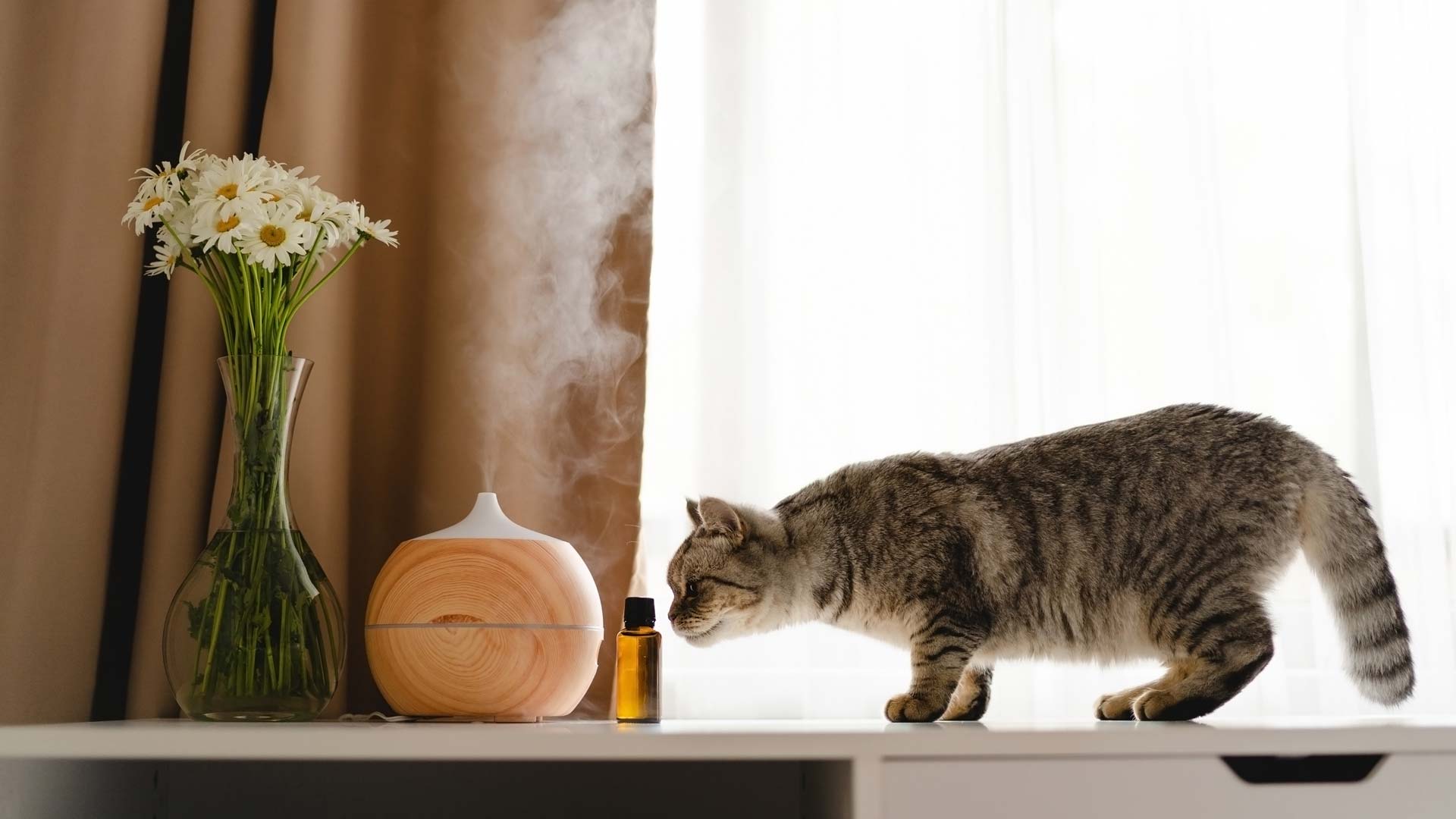
Diffusers which emit beautiful, delectably fragrant aromas may seem benign, but can be unsafe since it uses water vapour to diffuse tiny oil droplets into the air. Inhaling diffused oils is known to cause negative respiratory effects on humans and pets, if used in small spaces and/or for an extended period.
Cats and dogs are much more sensitive to scents than humans are. Dogs have 1 million odour senses & the area of their brain that is dedicated to analysing odours is 40 times larger than that of a human brain. Cats have 2 million odour senses. Their noses are VERY sensitive & sense of smell is 14 times better than humans.
What you may believe to be an insignificant, fragrant scent is most likely overwhelming and/or harmful to our furry family members.
Essential oils are made from highly concentrated plant substances and are commonly used for aromatherapy & alternative medicine. There are numerous types of essential oils, each with their own unique physical and chemical properties.
“Natural” doesn’t always mean safe.
There is some preliminary research – largely funded by companies selling herbal-infused pet products – that suggests essential oils may have some health benefits for pets. Research is still in the early stage for the use with pets & benefits & risks should always be considered when using alternative therapies & making sure you select “safe” oils if using them to freshen your home tang.
Our tame feline friends are actually missing the specific enzyme that allows them the ability to process various compounds found in essential oils, more specifically phenols. Phenolic compounds occur naturally in plants & are highly concentrated in essential oils. Because of this it could potentially lead to serious health conditions.
Essential oil and aromatherapy diffusers, candles, liquid potpourri products, and room sprays are all sources of airborne essential oils that can be inhaled or licked off fur or paws that have trapsed around the house. If you can smell the aroma of the oil, that means that there’s oil in the air and can result in respiratory distress.
General guidelines for the use of essential oils with kitty cats:
- Do not apply or feed essential oils directly to cats, or leave oils in areas where they may come in direct contact. While some oils do have insect repellant capabilities and smell great, the risk of serious or fatal reactions in your cat is high.
- If your cat has asthma, allergies, or another respiratory conditions, avoid all use of essential oils.
- Keep cats out of rooms with a high concentration of essential oils. Kittens, elderly cats, or cats who have liver or respiratory problems should be kept out of any room where essential oil diffusers are used.
Essential oils poisonous to cats:
- Cinnamon oil
- Citrus oil
- Clove oil
- Eucalyptus oil
- Oil of Sweet Birch
- Pennyroyal oil
- Peppermint oil
- Pine oils
- Tea Tree oil
- Wintergreen
- Ylang Ylang
Now, the essential oils that are safest to use around healthy adult cats:
- Rosemary
- Copaiba
- Helichrysum
- Oregano
- Frankincense
- Cedarwood
Cats can also tolerate chamomile, lavender, thyme and valerian essential oils at very diluted concentrations.
As for dogs’ & their sensitive olfactory system – it is very important to consider carefully the use of essential oils at home. Placing a few drops of lavender oil on your doggos bedding, whether it be to mask its odour or an attempt to create a calming relaxing possie it may just cause further stress. Oils used incorrectly can potentially lead to changes in behaviour, adverse central nervous system effects, and respiratory problems.
Natural flea and tick treatments that use essential oils are not recommended due to the lack of data supporting the proven effectiveness, therefore most likely not actually protecting your dog at all & with paralysis ticks becoming more prevalent here in Victoria it’s best to stick with products with proven efficacy.
Fragrant smelling liquids may attract curious, mischievous dogs. ALWAYS keep all, including “safe” essential oils out of reach. Do not apply pure essential oils topically or give orally to your dog.
For our canine friends, toxic essential oils include:
- Pennyroyal oil
- Pine oil
- Tea tree oil
- Wintergreen oil
- Cinnamon oil
- Citrus oil
- Peppermint oil
- Sweet Birch oil
- Ylang Ylang
And essential oils safe for dogs;
- Myrrh
- Frankincense
- Chamomile
- Lavender oil
- Ginger
- Rosemary
The bottom line is essential oils can be dangerous to our fur babies and there’s scant evidence that they’re effective in providing relief to medical conditions, reducing stress or anxiety or been used as preventative treatments.
Symptoms of essential oil poisoning include:
- Drooling
- Difficulty Breathing
- Weakness
- Trouble walking — sometimes they stagger and stumble
- Vomiting
- Skin Irritation
If your pet is showing any of the above signs and you believe it’s due to an essential oil, wash it off as best you can if topically on the skin or fur or if you’re diffusing oils, then turn off the diffuser, get your pet into the fresh air, and call the pet poison helpline or your veterinarian.
Just make sure the oils you use are known to be safe. Do not use in small spaces or rooms with bad ventilation & try to air rooms out after use. Make sure oils are stored somewhere in your home that pets cannot access or knock over.
And remember, the more dilute the oil, the safer it is…